House of Leaves

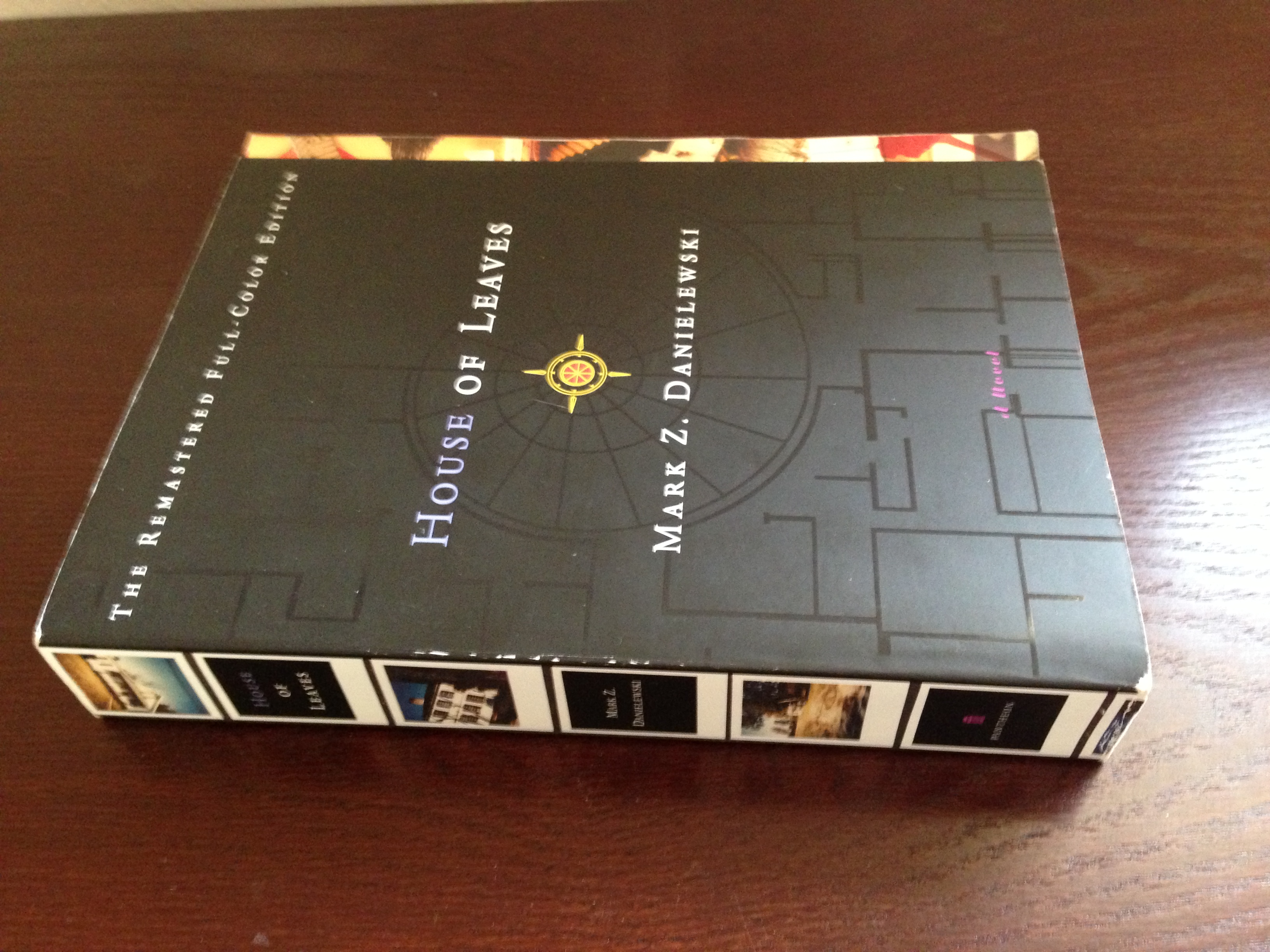
I’d like to introduce you all to my new favorite book. House of Leaves by Mark Z. Danielewski is a 700-page beast of a novel, and I loved every freaking page of it. I loved it from cover to cover. (Seriously, the subtle glossy pattern on the cover is gorgeous and perfect symbolically.) I loved it so much I even read the index at the end. And not because I’m crazy or exaggerating, but because even the index held content of interest. Every single word and graphic and footnote and thought in this book struck me as put there by intention, and there is little in art I love more than purposefulness. So I devoured it.

My copy of House of Leaves.

My copy of House of Leaves.

This isn’t, per say, a book review. I don’t know this author personally, nor am I published by Random House (I wish). No one sent me this book; I paid for my own copy – at a whopping 30 bucks, too (full color, huge book: totally worth it). I’m not opening up to submissions for book reviews on my blog, either. I quite simply loved this book so much I had to share its existence with you – just in case you might love it too. That and I’m dying to talk about it.

Okay, so, the basics. As much as it pains me to say, I really don’t think this book is for everyone. I would categorize House of Leaves as experimental, literary horror. If you love those things, it’s worth checking out. If you don’t like being scared – like well and truly disturbed in an under-the-skin psychological way – you probably won’t like it. And if you don’t like making your mind work double – maybe you prefer fun commercial reads, etc. – you definitely won’t like it. Since I like little in this world better than getting both my ticker and my thinker racing, you can see why House of Leaves is so up my alley.

And because I’m willing to bet many of you are already underestimating how truly intellectual of a read this novel is, I’m going to reiterate. I’m certain I could spend a college lit class analyzing House of Leaves the entire semester and still not understand every nuance. And if I ever hear of such a college course offered in my area, I’m auditing it for sure. This Spin blurb sums it up pretty well: “Stunning… What could have been a perfectly entertaining bit of literary horror is instead an assault on the nature of story.”

That’s the root of it, right there. An assault on the nature of the story. House of Leaves is an experimental novel. (Notice “a novel” on the cover; remember the “assertion” reason from this post?) I’m going to try to break down the basics without giving anything away.

There are three main layers of story. At the center is the scary one. Pulitzer Prize-winning filmmaker Will Navidson, his partner Karen, and their two children move into a house with a startling oddity: their new house is bigger on the inside than it is on the outside. (That, dear writers, is what you call a high concept premise!) To capture this phenomenon, Navy sets up a bunch of cameras in the house. The story unfolds as a documentary; only what Navy catches on tape and still can be told to the reader.

The second layer of the story is an old man named Zampanò who is studying and retelling this supposedly famous documentary. But not just that; he’s writing a book on it. A whole, huge book called House of Leaves. And he gets obsessed. He tracks down relevant references and allusions and footnotes the central text. He corrals criticism of the film. He offers his own analyses. He basically turns it into his life’s work. His notes are almost pompously scholarly, but wonderfully thoughtful.

The third layer of the story is who I would call our narrator, a marginalized youth named Johnny Truant. Johnny finds Zampanò’s unbound work when the old man dies… and takes up his task. His wry, jaded voice is a wonderful counterbalance to the pretention of Zampanò.

As you can imagine, with three different storylines and multiple narrators, the stories become entwined. Footnotes abound, and often get in the way of each other. Appendices and indexes send you bouncing back and forth like a pinball. Strangeness and madness grow. Uncertainty strengthens. Lines between narrators blur.

It’s fantastic.

And I think at the root of it, that’s the trick to enjoying House of Leaves as a reader: let it take you. Let the fear seep in. Let the footnotes send you back and forth until you’re lost. Let the wild experiments with format really get to you. Let yourself pause often to think about why something is done, and what effect it has on you. Reading this book was a physical experience for me. For example, at one point I was literally holding the book upside down, so turning the next page felt like going backwards. I was reading backwards; why would Danielewski do that? What does it mean?

It’s my new favorite book. Well, expect for my homeboy Poe, if you count his collected works as a book. He can stay. I guess I should say this is my favorite contemporary novel (written in the past 100 years, I think that criteria is, right?). Speaking of Poe, did you know that the female musician known as Poe is Mark Z. Danielewski’s sister? Her song “Haunted” is about this book. The quote in House of Leaves, “No one should brave the underworld alone,” is commonly misattributed to Edgar Allan Poe, but it’s actually lyrics by the artist Poe. Fun fact. 😉

This is so much more than “just” a horror novel. It’s a love story. It’s a war cry against tropes. It’s heartbreaking and terrifying and shatteringly brilliant. It simultaneously makes me thrilled to be a writer and despair that I didn’t think of it – that I might never write anything this good. It’s grit shot through with magical realism and poetry.

With a book of this size and caliber, buying it and deciding to give it a try is definitely a commitment. As I said, it’s not for everyone, but I simply had to share how much I love it. If you’re intrigued, I encourage you to get a hold of your own, and I definitely think it’s worth the extra dough to find the remastered full-color edition.

Have you read House of Leaves? If so, what was your favorite part? (If it contains spoilers, don’t tell me in the comments!) And if not, does it intrigue you or send you running? What book have you read that blew you away like this?

Posted in Books | Tagged | 32 Comments

A Week at the Beach

I’m home from my little retreat (I got back on Wednesday night). I know some of you are probably curious to hear how it went, so I thought I’d talk about that today.

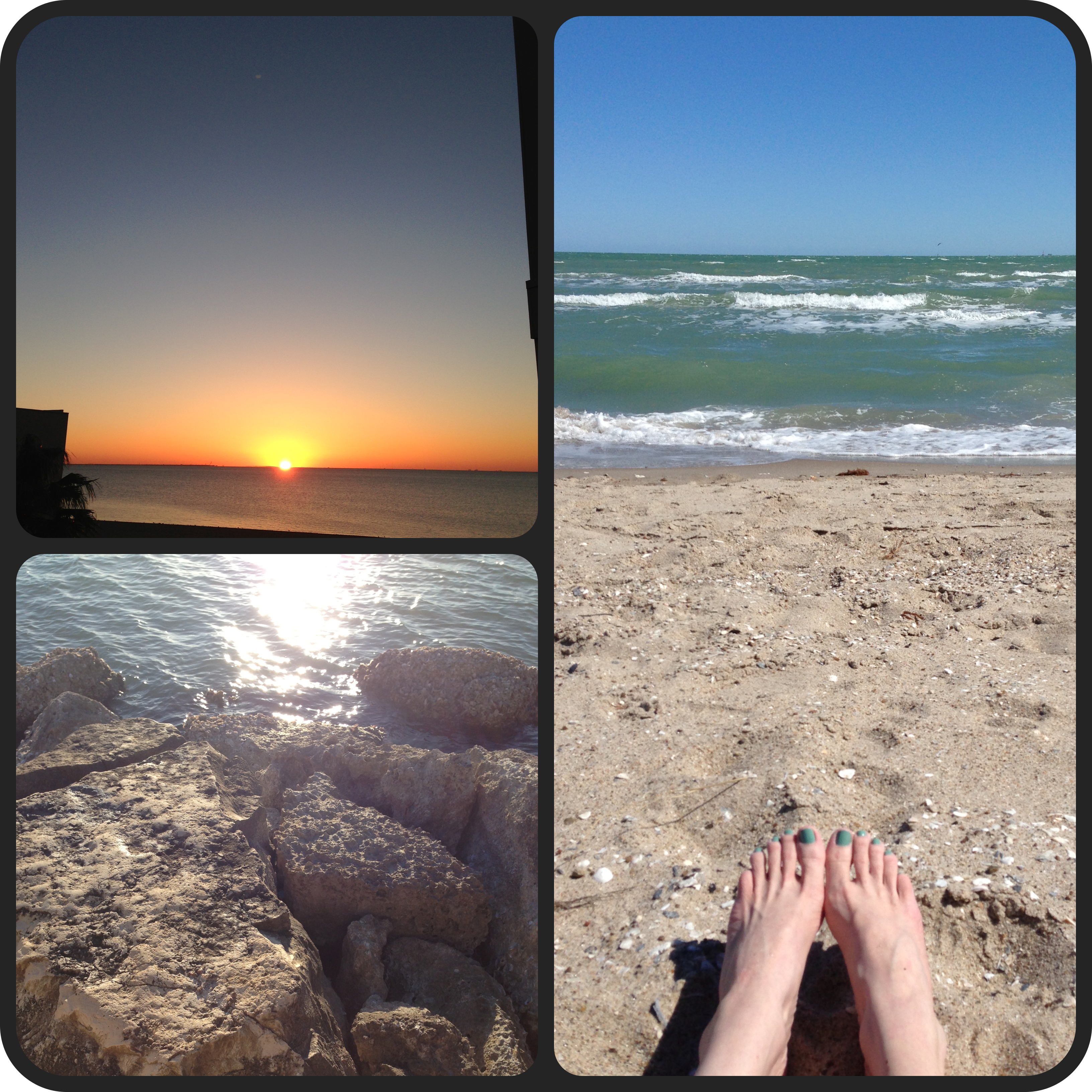
It was a lovely time. The beach was beautiful. My condo was kind of a hole, which is why it was so cheap, but aside from the one lively roach I had to battle (barefoot!), that didn’t bother me. The view is what mattered, and I had a gorgeous one.

Top left: sunrise from my balcony. Bottom left: from the rocky pier. Right: catching some sun.

Top left: sunrise from my balcony. Bottom left: from the rocky pier. Right: working on some new freckles.

The first two days I was there, I spent most of my time staring at my computer screen and metaphorically pounding my head against the wall. I came to work on Book X. I felt sure I would explode with inspiration, since that book takes place on the beach and I’d set up my computer to look out at the beach. I’d unplugged completely from the internet and I was alone. No distractions. So why weren’t any words coming?

Literally hours a day were spent getting maybe 2,000 words total. This is really bad for me. Usually when I’m drafting I have a word count minimum of 3k a day. On my last retreat, I wrote 5k every day. And this time I was getting 1k and not even loving it? I planned to be working on what I’m calling in my head “my life’s work.” Instead, I found myself drafting a very early reader called “The Sounds of Pooping.” O__O (Don’t ask.) Needless to say, something was off. More than my sanity, I mean.

Luckily, the hub-a-dub and I planned for him to come stay with me for two nights in the middle of my trip. By the time he got there I was so mad at myself I’d nearly given up. I felt guilty and awful for wasting this trip I felt so lucky to have. Then it occurred to me: I’d been comparing my retreat to my last retreat, in which I was revising an already existing novel. I was writing thousands of words a day because I knew what to write. It was not a retreat of inspiration, but productivity.

I was also comparing my retreat to my past vacations. I came up with the idea for Book 2 on a ride from my hometown, and then Book 3 on a trip to Colorado. On these trips, I didn’t write anything. I just absorbed inspiration like a sponge and let ideas tumble around my head.

What I was trying to do with this retreat was both. I wanted the magical rush of ideas from old vacations, but I also wanted the dedicated productivity of word count from my last retreat. I suddenly felt sure that this was the problem. I couldn’t have both.

So I spent the next two days enjoying the beach with my husband – almost no writing at all. We went to an aquarium, a museum, a couple of restaurants. We had a blast, actually. It was an unexpectedly fun mini-vacation for both of us. When he left, I felt refreshed and less stressed.

Poetry started pouring out of me like blood. I couldn’t have stopped if I tried. I put together a new chapbook. I got two new short story ideas and started them, letting them drop when inspiration turned into work. I decided that, hey, I can work at home. Inspiration is what I really needed. New energy, the tank recharged by solar power. I woke up to see the sunrise every morning. I laid out during the warmest part of the day. I took walks on the beach every night.

I realized that I’d tried to keep my muse on a leash, like I often do at home. But she wanted to play. I wanted to play.

Instead of sitting at my computer and writing new words, I started storyboarding for Book X. Yes, I have Scrivener for this, but it really isn’t the same. I wanted to walk around, gesture, get mumbly. I wanted to pick up my pages, run a thumb over the words, fucking roll in it.

There’s a quote by Tom Gauld: “I love using the computer but I try to stay away from it till I’ve done most of the thinking for an idea, looked at it from all sides, because I feel that once the computer is involved things are on an inevitable path to being finished. Whereas in my sketchbook the possibilities are endless.” Yes. That’s what I had been feeling.

I didn’t use my computer much after that. Just notepads, pens, sticky notes, sand, sun, and gray matter.

This WIP isn’t ready to be drafted yet. I don’t want it to be on the “inevitable path to being finished.” It has always been my “background project,” the one I come back to when I feel inspired. I was hoping that maybe over the past 6 years I’d gained enough to piece it together, but I haven’t. And this WIP means too much to me to force it. So instead, I relinquished the reins and played. And the rest of my trip was sort of magical.

The muse, after all, has wings; every once in a while you’ve got to take off the leash and let her use them.

Posted in The Art | 27 Comments

My Writer Unboxed Debut

Hi guys!

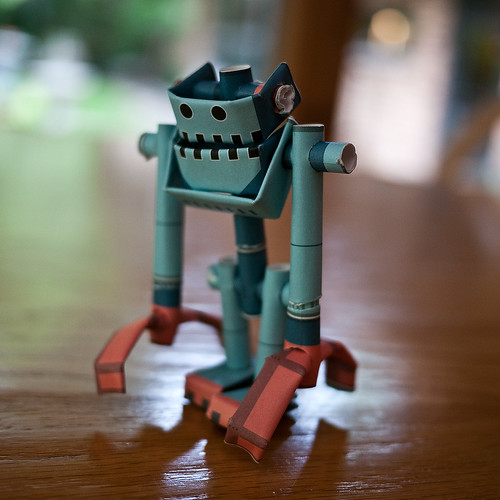
I’m back from the beach! I’ll tell you all more about that in my usual post on Monday, but I wanted to let you know before then that my very first post as Writer Unboxed’s Twitter columnist is up: “My 5 Unshakable Beliefs.” I talk about balance, quality, authenticity, and sad robots.

Photo by rnv123.

I’m so nervous and excited, and I hope you like it! If you get a chance in the next couple of days, I would love for you to check it out, maybe drop me a comment.

And if you’re here visiting because you found me on Writer Unboxed, welcome! I’m so glad you stopped by. Comments will be closed on this post, but feel free to browse around and leave me a note on other posts. Here are all of the blogs I’ve posted about Twitter in the past, right here at home base:

Twitter Tips Part 1: How to Get Followed Back
Twitter Tips Part 2: How to Keep Your Followers 
What the Way You Retweet Says about You

And you can also visit my old guest post at Writer Unboxed, “Be a More Confident Writer: 5 Choices That Might Be Hurting Instead of Helping.”

Thank you all so much. Have a great weekend,

Annie

Posted in Updates & Announcements | Tagged | Leave a comment

Ways to Give Back to the Book Industry

I had a wonderful birthday last week. I got many lovely wishes and some truly thoughtful and amazing gifts. It got me thinking about the act of giving, and how it’s really just a way of showing that we care. Big expensive gifts are great, but the ones that truly touch me are those that someone put time, effort, or consideration into. Really, when you break it down to its simplest form, it’s another form of communication.

And of course, since I work in the book industry, my mind took it there. I feel incredibly lucky to work in a job I truly love and in the special industry that surrounds it. It would be difficult (and sappy) of me to detail all of the many ways people in this industry have touched my life, so I’ll spare you that. Instead, I thought I would brainstorm some ways that I, and you, and all of us can give back to an industry that has given us so much.

~*~

Buy Books

This might seem painfully obvious, but the book industry is first and foremost business-driven. Without money in the form of purchases from consumers, there wouldn’t be an industry to support artists in a career capacity. And as much as I love libraries, if everyone rented every book they read instead of buying some, the whole business would go broke.

In that spirit, I’ve recently been going back and buying some of the books I rented from the library for free (thanks in part to this post courtesy of Nina Badzin) – especially those books that truly impressed me. For one thing, I’ll likely want to either reread or loan out most of them. It’s also a good way to encourage my favorite authors to keep on publishing their work. Essentially, I’m giving everyone who worked on that book my vote of endorsement, from writer to cover designer.

Review Books

Second, like my buddy Laura, I’ve been reconsidering my stance on doing book reviews. I haven’t come to a definite conclusion yet, but I’m weighing my options. The posts where I discuss books are some of my most popular posts (Twilight, Fifty Shades of Grey (which I’m pretty sure was a mistake; you guys all seem to think I’m super kinky now)), which makes me think I have something to offer readers in regards to book reviews. So I don’t know; we’ll see.

But it’s undeniable that book reviews help the industry. (My quandary is whether or not other authors – specifically me – should be the ones to provide them, not that they should exist.) Positive reviews boost sales for authors. Negative reviews steer readers towards good choices that will keep them reading. And all reviews build hype and awareness for books in general. If you’re in a position to do book reviews, it’s a great way to give back.

Talk about Books

Maybe you can’t afford to buy books and instead get them at your public library. Maybe, like me, you’re a writer who’s chosen not to do reviews. But there’s still one vital way you can support authors and books themselves: tell your friends.

If you love a book, recommend it. Loan it. Spread the word. If everyone who loves a book does this, the book gets a wider audience and, eventually, more sales and support. This is something that any reader can do. (For even more ideas, I absolute LOVE this post by Chuck Sambuchino at Writer Unboxed: “How to Support an Author’s New Book: 11 Ideas For You.”)

Send Fan Letters

Last week I blogged about how to write a fan letter. I took you through the steps, sprinkling in some tips I hope were useful, but what I didn’t have space to do was talk about why writing fan letters to authors is so important.

Writing can feel like such a lonely occupation. It’s a career riddled with rejection, critique, and criticism. Sales are great, but they aren’t personal. I can’t imagine an author in the world who wouldn’t be touched by a personal letter praising their art. Really, it’s what writers strive for: touching others with their words. Being concretely told that they were successful is a beautiful thing.

Support Writing Organizations

In talking about supporting the industry, I would be remiss not to mention writing organizations. Their main purpose is the support of writers! So if you’re not sure how you personally should give back… you can always support organizations who decide for you.

If you’re a writer, you can join them. Dues go to funding that help the group do good deeds. You can also contribute your time, your expertise, your leadership, or your moral support.

If you’re not a writer, you can still help these groups by donating money or volunteer hours. Most groups do fundraisers once or twice a year.

And please forgive a quick plug for one of my favorite non-profit groups. Every time I buy a book online, I go through the Amazon banner at the top of this website to help fund my local poetry organization. Supporting local poets AND supporting the authors I love? Win/win. We would love for you to do the same! After you click on the banner to get to Amazon, the rest of your shopping is exactly how it always is, but we get a small percentage of your total purchase.

Share Things You’ve Learned

Ah, advice. When I was new to this writing-as-a-career thing, I was so anti-advice it wasn’t even funny. *hides deleted blog posts under the table* I was convinced that there was no one “right way” to do things, so all of this advice hype must be bullshit. And you know what? There IS no one right way to do things. But… there are many things that have been proven effective for hundreds of writers time and time again. And who am I to belittle that?

Part of growing as a writer is accepting that I don’t know everything. One of the benefits to growing as a writer is actually learning a few things that drastically improve my craft, lifestyle, etc. So for me, advice to other writers is all about sharing the things that have most helped me personally. Advice can come across as “my way or the highway” or “I know it all,” but if it’s shared humbly, with the intention of genuinely helping others, and with the acknowledgement that everyone is different… it’s hard to go wrong. The advice naysayers are certainly free to ignore it.

So if you’re a writer and you’ve heard some good advice that helped you, go ahead and share it! Will it work for everyone? No. Will it help someone? It just might.

Be a Cheerleader

And last but not least… never underestimate the importance of moral support. It weren’t for the love of my incredible family and friends, I would most likely be straightjacketed right now, trying to write a novel by pecking the keyboard with my nose. Or worse, I might have given up completely.

~*~

So, dear readers, what have you been doing lately to contribute to the book industry? Do you have some ideas I didn’t think of? I’d love to hear from you!

Posted in Reading | 15 Comments

10 Tips for Writing a Fan Letter

If you’re a reader, chances are pretty good that at some point in your life you’ve read a book that changed you, shook you, kept you up late, stayed with you for weeks. In the past year, I decided to start sending letters to those authors of mine, letting them know the impact they’ve had. It seemed a small trouble to go to considering all I got from their writing.

So I thought I would share some of the guidelines I used to write those letters, in case any of you are looking to send out some “fan mail” of your own. I’ve outlined 10 tips below, but keep in mind that these are guidelines that are supposed to ease any anxiety you might have over the process – authors are like rock stars to readers, after all, which can be squee-inducing to the faint of heart – not rules you “must follow.”

~*~

1) Send it snail-mail.

This isn’t a must, but it’s a touch that I think makes a difference. Yes, email is easier, but that’s why taking the extra 5 minutes to put a piece of paper in an envelope means so much. If you can’t find their address—which is hopefully the case—just send it to them c/o (care of) their agency, which should have an address listed online. Hopefully their agent will forward the letter to them at home.

2) Introduce yourself and the book in question.

This doesn’t have to be extravagant! A simple, “Hello. My name is ____ and I just finished reading ____,” will do nicely. If you have some sort of connection to them, such as being an aspiring writer in their genre, etc., you can mention that if you want, but don’t go overboard. Which brings me to…

3) Be personal.

If you know this writer through real life or some sort of social media, by all means, speak in your natural voice. Just because it’s snail mail doesn’t mean it has to be stuffy. If you tweet back and forth with this person all the time, you don’t need to address them as Ms. or Mr. Lastname.

The point of this letter is to express a reading experience that went above and beyond average. So yes, the letter can get personal. You can tell them why something about their book touched you. If your parent just died and the book is about that—and helped you get through it somehow—that’s a beautiful thing to let them know. But…

4) Don’t get creepy.

Sometimes the temptation to idolize people you’ve never met is strong, especially if you feel like you know them because you’re familiar with their work. But remember, this is just a person, like you. Keep it appropriate. Don’t ask for favors, don’t ask for personal details, don’t ask for help. Just keep it to letting them know that they’ve impacted you positively in some way, even if it was just a weekend of entertainment.

5) Keep it short.

If this is a published author, I think it’s courteous to assume that they’re a busy person. And yes, you’re doing a nice thing, but that doesn’t give you the right to ramble on for 18 pages (front and back!). Unless this is truly a personal letter, I think 1 page single-spaced should be adequate.

6) Keep it mostly about the book.

Maybe you think so-and-so is hot. Maybe you love the bits of their personal life they reveal on Twitter. Maybe you have a super crush on them or their adorable doggy. But those things being true is a lot less creepy than telling the author those things are true. You don’t want to give off stalker vibes.

7) Be specific.

What is it that you loved about the book? Be specific! Writers love to know what exactly worked and why. But…

8) Don’t speak in hyperbole.

When we hear the words “fan letter,” we tend to think of long raves. Which is okay, if you feel the need to do that. But don’t fake it. Don’t tell them it’s the best book you’ve ever read if it’s not; tell them it’s good or great or excellent. Don’t tell them you’re going to buy all of the books they’ve ever published if you aren’t; tell them that you gave it five stars on Goodreads or that you’ve recommended it to a friend.

Remember, they aren’t *expecting* this letter, so any level of compliment you give (besides backwards or underhanded ones, of course) will be a pleasant surprise. Be honest, genuine, and candid. Don’t blow smoke up their ass.

9) But don’t talk about negatives.

This might sound obvious, but there are many reasons that people feel the urge to tell someone something they didn’t like. Maybe it makes us feel clever or superior. Maybe it’s a disclaimer. I know I truly love some flawed books, and when I recommend them to people I mention the negatives so they don’t think I’m oblivious or have awful taste. But a praise letter is not the place to talk about those things. Even one negative comment buried in a nice letter can hurt. This isn’t a critique group where the writer is expecting criticism; it’s a friendly letter. This goes for backhanded compliments too. (Even though your main character annoyed the crap out of me, the plot was so amazing that I couldn’t put the book down!) Don’t hide insults or little jabs amongst your praise.

10) Include your contact information,

just in case they want to reply, but don’t expect a response.

And finally, thank them and/or wish them well. Sign your name and send it off. Hooray! Hopefully, you just made someone’s day. =)

~*~

Have you ever written a fan letter? Do you have any tips for the rest of us?

And authors out there… have you ever received a fan letter? What was that like for you? Do you have any wisdom to share from the experience?

Posted in Reading | 27 Comments