The Organized Writer Updates

An organized writer is a happy writer. Case in point? My WIP bookshelf. Look how happy!

An organized writer is a happy writer. Case in point? My WIP bookshelf. Look how happy!

Hi guys!

I hope that most of my fellow writer followers are familiar by now with the section of my website called The Organized Writer, where I exploit my neuroses in order to offer free documents to help writers– you guessed it – get organized. If not, now’s a great time to check it out. If so, I have a few updates to fill you in on.

I’ve added a brand new document: the Short Story Submissions Chart. If you write short fiction and send it out to be considered for publication, you absolutely need a way to keep track of it. If you don’t already have one, right this moment is the best time to start.

On that note, I’ve just updated the Poetry Submissions Chart, so if you submit poems and don’t have this yet, here’s your chance.

What’s more, I’ve also updated the Character Chart. I’m doing some revisions on an old novel right now and in rebuilding my characters, I found that the old chart was lacking some important fields. So feel free to download this one any time you’re creating new people out of thin air.

The good thing about all of these documents is that they’re simply charts in Word files, so you can always make them your own. Want to add a field? No problem. Don’t use one? Cut it out. Hate my font choice? Switch it. Once you download these, they’re yours to do with what you see fit (for personal use). Change them, love them, use them. It’s your boat; float it however you want.

And on a final note, you might notice that my Organized Writer pages now have PayPal donate buttons so you can tip the author (yours truly). Installing this feature wasn’t the easiest decision for me to make, but over the years there have been over 15,000 downloads of these documents, so people must like them, huh? And although I always have and always hope to keep my website ad-free, a girl’s gotta eat.

That being said, I made this a “tip” feature specifically because I want my documents to remain free. Please, please, please don’t feel obligated to tip. I mean this from the depths of my heart: if you get good use out of these documents, I’m very happy. And if you share the links with your writing buddies, all the better. That’s payment enough for me. A tip is just gravy. (Actually I don’t like gravy, so I guess a tip is more like… cheese. Mmm. Cheese.)

So go forth and download! It’s time to get organized.

To view a full list of all available documents, visit this page or mouse over the drop-down menu in my website header.

As always, I’m open to requests for new documents. Comments here will be closed, but feel free to email me your ideas at annie_07@alumni.utexas.net.

Posted in Resources | Leave a comment

What Is Gothic Fiction?

Image by fluffy_steve
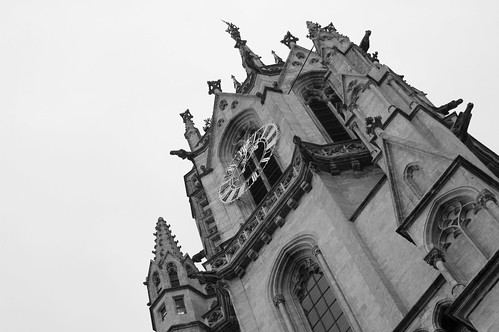
Image by Grufnik
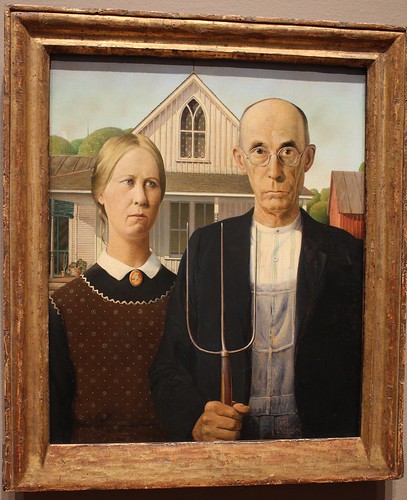
Image by Joey Orso

I’ve decided to continue my trend of analyzing, defining, and explaining literary genres by illuminating one of my favorite and often-misunderstood genres; gothic fiction.

So what is gothic fiction? Let’s start at the very beginning…

Gothic History

The Goths were a Germanic tribe that battled the Roman Empire for centuries and played a large role in shaping Medieval Europe as well as the English language as we know it. You might assume that “gothic architecture” came from these people, but you’d be wrong. During the Renaissance, people began to rediscover Greco-Roman architecture. They called it “gothic” not because it was the building of the Goths, but because they considered it “barbaric” like said tribe. The name stuck.

Gothic Fiction

Now we get to fiction. The gothic novel began around 1780 and grew in popularity and established itself as a genre into the 1800’s. The genre came to be called “gothic” because so many of these books took place in castles, abbeys, mansions, and other buildings of the gothic architectural style (which wasn’t really Gothic; how’s that for convoluted?).

Of course, setting a book in a gothic building isn’t enough to make the book gothic. Gothic literature became trendy enough to become its own genre, and like all genres, it established its own set of staples, messages, and tropes. At its very root, gothic fiction is a blend of romance and horror. Love and fear. Beauty and grotesquerie. It uses this contrast to heighten each.

If we focus on this juxtaposition, many of the gothic staples become quite obvious: the beautiful maiden, locked away by a villain; the exquisite old mansion, now in ruins; the touching love story, shattered by dark secrets. This constant contrast of the darkest and most lovely elements lends the works an exquisite sense of drama that often borders on melodrama, which in turn opens up the genre to parody of all scopes and intents – another common feature of gothic literature.

The final staples of the genre are atmosphere and setting. These are often utilized to such a degree that they cause a minimization of character. The protagonists in gothic novels might be nondescript, but the atmosphere is a pervasive sense of dread so thick you could walk on it. Gothic setting goes back to the genre’s roots in architecture. In early gothic novels, the buildings are intensely–you guessed it–atmospheric. The choice of using once-splendid buildings that are now crumpled in rot and decay is often believed to be a commentary on the state of society.

Contemporary gothic novels don’t have to use gothic architecture, but they do uphold this tradition of settings so vivid they become not just an atmosphere but an entire character. If you remove the setting of a gothic novel, the atmosphere disappears and the story disintegrates. Thus “southern gothic” makes such use of its southern setting that it permeates every aspect of the novel; contemporary gothic does the same with more modern locations, and so on.

Along with staples, there are tropes. Tropes are not necessary, but are great ways to help readers recognize when what they’re reading is gothic. Common gothic tropes include: the virginal maiden held against her will, the oppressively evil villain, ghosts (both real and perceived), incest (both real and perceived), thugs/bandoliers/other gangs of bad guys, members of the cloth (both corrupt and holy), prophecies, omens, and other inescapable futures inherited from the past, the supernatural (both real and perceived), skeletons, locked and hidden doors and passageways, mystery, and – of course – forbidden love.

Just for fun, let’s take a look at one of my favorite examples: Carrie Ryan’s YA zombie novel The Forest of Hands and Teeth. Bet you thought it was a regular old dystopian horror novel, didn’t you? I happen to believe it’s a gothic novel disguised as a zombie novel. Let’s break it down. [WARNING: Some mild spoilers ahead.]

  • horror: Mary’s village lives in constant fear of the Unconsecrated (zombies) breaching their fences.
  • romance: Mary is in love with Travis.
  • drama/melodrama: Love quadrangle; complications.
  • vivid atmosphere: The Guardians, the Sisterhood, the Unconsecrated, the Forest of Hands and Teeth… you might be able to guess that the atmosphere is overwhelmingly vivid.
  • setting as character: Check. The village, the pathways, the forest… all striking. The book would fall apart without this setting.
  • the virginal maiden held against her will: Mary is trapped in her small town–literally fenced in.
  • members of the cloth: The Sisterhood, implied descendants of nuns, is the dominant authority.
  • bands of bad guys: The Guardians keep all zombies out… or are they keeping the villagers in check?
  • inescapable inheritance: Mary is obsessed with her mother’s oral history of the world before the apocalypse, including rumors of the ocean beyond the forest.
  • the supernatural: Zombies!
  • locked doors, secrets: The Sisterhood seems to hold the truth about the world before, but won’t tell.
  • architecture: The ruined tower that Mary visits to get away.
  • a mystery: The fences around the town branch off into two fenced-in pathways. Where do they lead? No one knows. Mary wants to find out.
  • forbidden love: Although Mary loves Travis, he won’t marry her because his brother is in love with her.
  • ruins and decay: The zombies are literally decaying and the tower is literally in ruins, but more importantly, when you look at it this way, the gothic message of the deterioration of society is only a hop, skip, and a jump away from dystopia, isn’t it?

Have I convinced you yet? We can do the same game with Rebecca, Wuthering Heights, Flowers in the Attic

Gothic as a Euphemism for Horror

As I’ve covered before, the horror genre as we know it today blossomed from gothic fiction. The fact that said subgenre actually gained enough popularity to become the dominant genre creates an interesting peculiarity: “gothic fiction” is now often considered a subgenre of “horror,” even though it was originally the parent genre.

The fact that horror has roots in gothic fiction does indeed blur some lines. And perhaps because horror as a genre struggles with literary credibility, “gothic” has become a euphemism for “horror.” If book sellers are afraid that marketing a novel as “horror” will chase away potential readers, “gothic” sounds softer and is generally a less-stigmatized word. Likewise, many closeted horror fans will call their favorite horror novels “gothic novels” to imply quality or literary merit that others don’t believe horror can obtain.

As a writer who is actively involved in both horror and gothic fiction, this drives me absolutely crazy, but it doesn’t change the fact that it’s true. Stephen King novels, for example, are often called “gothic fiction” by readers who don’t want to be associated with blood and gore, but King quite simply doesn’t write gothic literature; he writes horror. (There might be some exceptions, perhaps Bag of Bones, but it’s been too long since I’ve read it to be certain. ‘Salem’s Lot, for example, is not gothic; it’s straight horror. The fact that it’s good and has some real value doesn’t change that.)

Unfortunately, this use of gothic as a euphemism for horror confuses the terminology for the casual reader, making it harder for horror to gain respect as well as making it more difficult to hunt down authentically gothic novels.

Note: It’s also worth mentioning that gothic, as a combination of horror and romance, has also had great ‘spin-off’ success in using predominantly horror or predominantly romance. Thus we hear books categorized as “gothic romance” or “gothic horror.” Generally what you can expect from these subgenres is a healthy dose of gothic style and themes, but leaning more heavily toward either a love story or the scares.

Goth Subculture

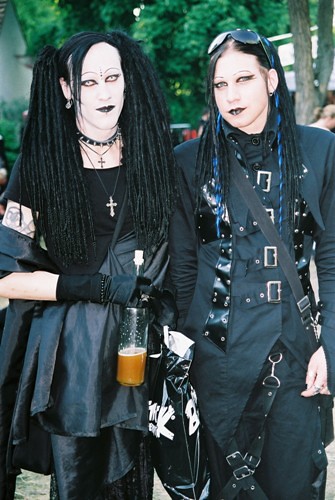
Others know of “gothic” as a way to describe a certain clique in high schools everywhere. This subculture of black clothes, shocking makeup, and moody music does take inspiration from gothic literature, as well as from the subsequent emergence of the horror genre. The strongest tie here is to the concept of romance mixed with horror, so many “goths” play with mixing beauty and startling imagery, whether in their personal style or artistic tastes. A good example would be clothes styled after ornate Victorian frocks, contrasted with “hard” things like safety pins, piercings, and tattoos.

Other Gothic Art

And of course, fiction wasn’t the only art form to get in on the strange and convoluted history of gothicism. At the same time that gothic architecture was gaining steam, a sister-style of art blossomed as well, which can be seen showcased in and often intertwined with gothic architecture in the form of stained glass, sculpture, and fresco. And as with gothic fiction, this style of art evolved and is often referenced in what you’ll hear called “modern gothic,” which picks and chooses which elements of the genre it wants to use and comment on–as does much “modern gothic” literature today.


There you have it: the long, complex, and multi-faceted breakdown of what gothic means. When you know a little history and accept that the same word means different things to different fields (art, history, architecture, fiction, culture…), it becomes clear that these are actually many things connected by a very thin thread. Hopefully I’ve helped you follow that thread to a better understanding of gothic fiction.

And how about that Forest of Hands and Teeth, huh? What’s a novel you’ve read that you now recognize as gothic fiction in disguise?

Like this post? Check out all posts in the What is Genre? series!
Posted in Genres, Horror | Tagged | 35 Comments

Creating the Life We Want

When I think about my life now, where I am and what I’m doing and just generally the state of my existence, it becomes clear to me that I’ve created it. I have very intentionally built for myself the life I want, and at no time is that more apparent than when I think back on my most difficult decisions.

I do believe there are things beyond our control, absolutely. When bad things happen there sometimes truly aren’t any good choices; there are only lesser evils and rocks and hard places. Sometimes there are tragedies. Sometimes there are things we can’t even believe are happening.

I don’t believe in fate. I do believe that sometimes we have to slog through shit to get to sunshine. I do believe that hardship can make us stronger. I do believe that beauty can come from heartbreak. I believe in chance. I believe in chaos. But I also believe in choice.

And choice, at the crux of it, is what allows us to create the life we want.

It can be indescribably difficult sometimes, to follow through with our desires. For me, the main push-back comes from intangible societal pressures. I don’t want to care what others think about me, but holy crap do I ever. I really care. I want people to like me. (Why is that made into such a despicable sentiment? Doesn’t everyone want to be liked?) More importantly, I want people to respect me–or at least accept my choices. The problem, then, arises when what I want isn’t what society wants me to want, and I must overcome that natural instinct and step beyond its draw.

Two decisions stand out to me as the hardest and most life-altering I’ve had to make so far. Without getting into two very long and emotional stories, those were: 1) to graduate early in order to move cities and live with my boyfriend (now husband), and 2) to use the inheritance when my dad died to stay home and write full-time instead of taking the job offer I received for a position at an advertising agency.

It would be difficult to explain how tortured I was in making those decisions. I had to stand up under the weight of so much societal pressure it’s a wonder I didn’t simply crack. I still have to stand sometimes. How often have people asked me about getting “a real job,” or called me a “stay at home wife”? Even right now; I’ve just deleted 500 words of explanation for each of those choices. I deleted them because I don’t need to justify why I chose what I chose. I shouldn’t need to defend what’s important to me, because it’s my life, not anyone else’s.

I believe in choosing the life we want. I believe in making it happen. Because of that (and more than a little happenstance), today I have a spouse I love, a beautifully healthy relationship, my dream job, and I’m exquisitely happy. So happy it feels almost illegal, like I shouldn’t be allowed this. But I chose it. Yes, some of it was luck. Some of it was chance. Some of it was completely beyond my control. But some of it, my friends, was choice.

Not all choices are so weighty. There are choices that we must re-choose over and over again. Each time I get a rejection for a short story and send it back out, I’m choosing to be a writer. I’m choosing to keep pursuing a goal. I’m constantly creating the life I want. We all are. We can acknowledge things beyond our control, but we can also employ the things that are within our reach. It’s never too late to start, to change, to redesign the structure of your desire and make the choices that fulfill it.

What was the last decision you made to help create the life you want? Is it time to make another?

Posted in Food for Thought | 55 Comments

October in Review: Links, Treats, and Nary a Trick in Sight

Lots of spooky and wonderful things have been happening this October, but it’s not over yet! You have just enough time left before Halloween to browse through some of my favorite links this month.

The Horror Writers Association (the professional organization I’m a member of) put on another great “Halloween Haunts” blog series this year. Many HWA members pitched in with memories, discussions, and goody giveaways. It’s not too late to send in your info/comment on posts to be entered to win!

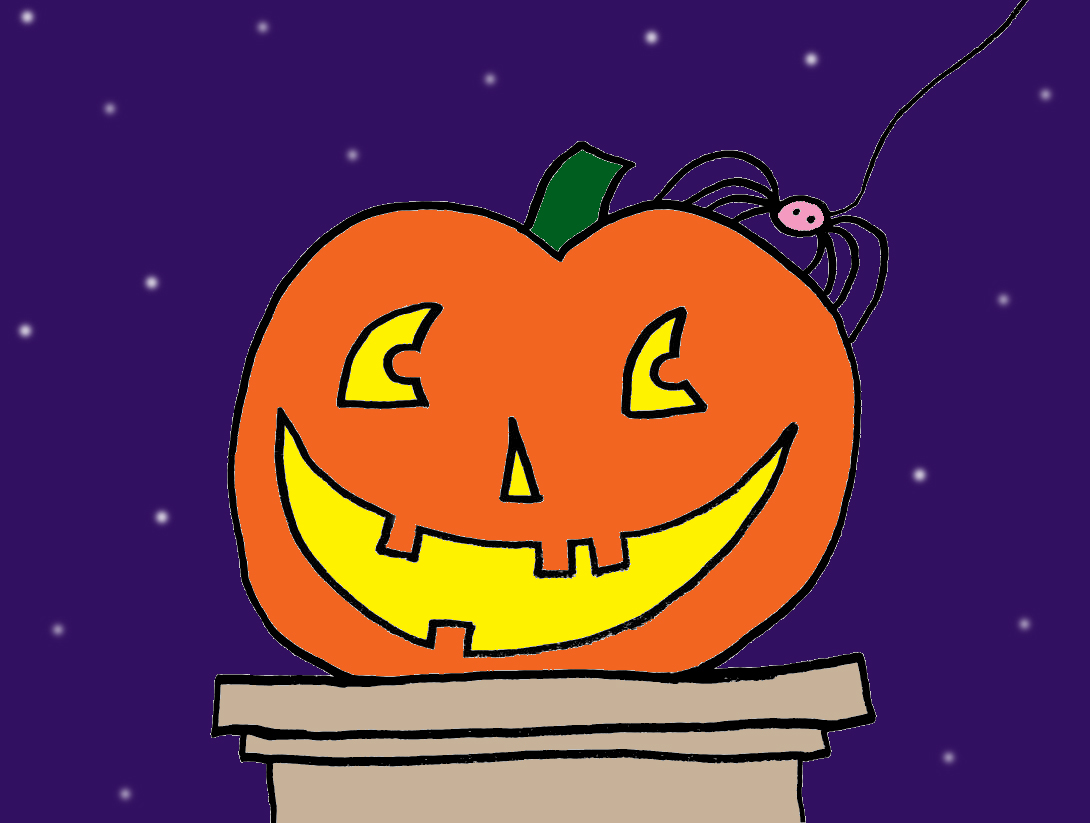
In the spirit of the season, I doodled this little guy for you.

In the spirit of the season, I doodled this little guy for you.

To start with you can read my post, “Reclaiming Horror,” right here. It takes a look at why horror as a book genre is in trouble and what we can do to fix it. Even if you’re not a fan of horror, I hope you’ll find it thoughtful and worth a read.

Two different horror novel boxed sets came out, pretty enough to make me drool on my keyboard: Jonathan Maberry’s now-complete YA zombie quartet and a Penguin Horror Classics set cherry-picked by Guillermo del Toro.

James Chambers wrote a beautiful nostalgic post to kick off Halloween Haunts: “The Old Stories Return.”

Carol MacAllister’s poem “A Demon’s Treat” (at the bottom of this post) made me smile!

Greg McWhorter recommended some alternative tunes to spice up your Halloween playlist.

On Twitter, Ellen Datlow drew my attention to this list of women writing excellent horror fiction at SF Signal.

This awesome article/photo set is of a dubiously true but undoubtedly spooky lake.

Here on my blog I set up some “Spook Packages” of suggested horror viewing/reading for every taste.

Heather L Reid gave a compelling explanation for why she began writing dark fiction (and loving all things Halloween) in her post “Night Terrors.”

Bram Stoker Award-winner Marge Simon was interviewed for Halloween Haunts, and shared a few poems.

Melissa Crytzer Fry always posts great nature photography blogs, but her one about bats is my fave!

Diann Daniel got to go see Stephen King speak (jealous), and was kind enough to share with us what she learned in her post “Four Writing Lessons I Learned from Listening to Stephen King.”

Lisa Morton gave a pretty cool summary of the actual history of Halloween for HWA’s Halloween Haunts. Hint: it’s not what you thought it was.

Matthew Warner gave a hilarious look at one child’s destiny to become a goblin… as interpreted through his artwork in “That’s My Boy.”

Lucy Snyder answered interview questions about her Bram Stoker award-winning horror story “Magdala Amygdala,” which I loved.

LitReactor introduced me to several of the latest additions to my Horror To-Watch list with ‘Ten Exceptionally Well-Written Horror Films.”

BookPage posted “13 of the year’s creepiest books.” I wants.

John Palisano passionately urged horror writers to write their hearts in “Opening the Vein.”

I reminisced about Halloweens and Octobers past here in “The Things a Picture Holds.”

Brian Taylor brought up the blessing/curse of all horror writers in “Horror Means…Stephen King?” And he’s right. I mean seriously, there are other authors.

I think my doppelganger is writing guest posts under another name again… “Scary Stories To Tell In the Dark: A Case for Scaring the Crap Out of Your Kids.” (Okay, okay. Maybe it was John Jarzemsky at LitReactor.)

Welcome to the Neighborhood” by Yvonne Navarro is a charming recounting of one woman’s first Halloween at a busy trick-or-treat spot. Dog costume included.

LitReactor columnist Robbie Blair posted this thoughtful and fascinating post: “The Uncanny Factor: Why Little Girls Scare the Shit Out of Us.”

I love recommendations! Brian Taylor gives us some more with “My Five Must Watch Horror Movies for Halloween.”

Author Robin Wasserman talks about Stephen King and teen audiences in this incredibly thought-provoking post at The Atlantic: “Stephen King Saved My Life.”

Thinking about trying your hand at this spooky stuff? The Writer’s Digest shop put up a bundle for “Writing Horror & Paranormal Novels.”

And if you STILL haven’t gotten your fill (you greedy goblins, you), you can even browse my links roundup from last October. And as always, you can get your chills at my creeptastically beautiful tumblr.

If I’ve missed something great, feel free to share in the comments!

Happy hauntings!

Posted in Horror | Tagged | 14 Comments

Reclaiming Horror at HWA

This year the Horror Writers Association has once again decided to honor the season with their month-long blog series, Halloween Haunts. Today my post is up, so instead of putting a new blog here this week, I’m inviting you all to visit me there, especially since this topic is so near and dear to my heart.

Plus, if you leave a comment on my post you’ll be entered to win a copy of the Ghostgirl series by Tonya Hurley plus a tote and t-shirt. Awesome! Thanks Tonya!

My post is called “Reclaiming Horror.” It’s about the state of horror fiction in today’s book market, the problems I see, and the ways I think we can fix them. You do not have to be a fan of horror to read this post. In fact, I would especially invite those less familiar or comfortable with the genre to give it a read.

And if you’re here visiting from Halloween Haunts, welcome! Comments will be closed on this post, but please feel free to check out my most recent post about Halloween as well as the “horror” category of my archives. Thank you so much for stopping by!

I hope to see you all over at the HWA blog. And while you’re there, you might take some time to browse the other posts this month. There have been many excellent pieces by HWA members, and many posts include giveaways for commenting.

Thanks guys!

Annie

Posted in Horror | Leave a comment