Disagreeing with Books: Writer Responsibility and Reader Accountability

“There is no such thing as a moral book or an immoral book. Books are well written or badly written. That is all.” –Oscar Wilde

By far, the blog of mine that has gotten the largest, most passionate and intelligent reactions has been “Why I’m Tired of People Ragging on Twilight.” Comments ranged: gleeful agreement and support of my guts in approaching such a volatile topic, carefully-worded debate, and emotionally-charged (dare I call them?) accusations. I disagreed with many comments, but I could see the logic and thought behind all of them. If you haven’t had a chance to check out the comments on that post, I think they’re well worth a read.

But one thing, the main thing, that I kept coming back to as I read these comments was the concept of censorship and author responsibility. No matter what someone’s thoughts were on the messages in Twilight, the end result was the same: holding Stephenie Meyer accountable for sending said messages.

Admittedly, there is a difference between censoring and judging... for most people.

I saw a contradiction there. Since I follow and am followed primarily by other writers on Twitter (who are unfailingly also readers), I tweeted the following:

@AnnieNeugebauer When you write a character, do you have them make the choices that “send the right message” or that they would most realistically make? Or do you only write characters who make choices that teach morals? And does that answer change if you write YA instead of adult?

All of the writers who answered chose “realistic characters” over “creating morals,” even for young adult books. And yet… so many people complain when they disagree with the message of a book.

The only explanation I could think of was that there is a disconnect between reading and writing. As writers, we all have different goals. Some people want to uplift and enlarge the lives of their readers. Some want to show life as it truly is. Some just want to entertain. And as readers, our wants vary too. We want to learn, be entertained, be challenged, and see ourselves deeply reflected in characters we love. Somewhere between the two, our expectations must shift.

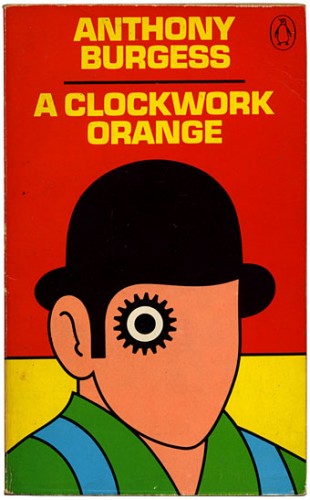
So where’s that line? What changes between a writer and a reader? What are the expectations of both, and more importantly, who is ultimately responsible? And does the answer vary depending on the level of morality being challenged by a book? What about the type of morality? Wuthering Heights is often accused of romanticizing destructive love. A Clockwork Orange purportedly caused copycat crimes of rape and beatings. Lolita looks at the world through the eyes of a pedophile protagonist. And American Psycho was so controversial that Bret Easton Ellis received death threats over it (ironic, no?).

Droogs: product of literary genius, encouragement for young people to rape and murder, or source of awesome Halloween costumes?

How many people have these books negatively influenced? And would those people have made similar choices eventually even if they had never read the books? Of course, no one can know these answers.

Personally, I will never agree that writers are responsible for readers’ beliefs. That’s just how I feel. I am 100% against censorship. Now, that doesn’t mean I like the messages in all books. Obviously, I don’t. There are some themes in the Twilight series that I strongly disagree with. Just because I don’t believe the books should be censored or that Meyer should be held responsible for readers’ choices doesn’t mean it doesn’t bother me that so many young women are possibly being influenced by her messages. It does. It really does.

And my answer thus far leans toward guardian responsibility: parents of young teens should talk to their children about the messages in the books. But what about kids who don’t have such involved, responsible parents? I don’t know. I’m really asking. It’s not an easy question to answer. Should all people be censored because some people might be negatively affected by something? I don’t think so, but I do feel sad for those young women (and men).

To equate (and perhaps conflate) one morally controversial topic with another, it’s sort of like the old saying, “Guns don’t kill people; people kill people.” To which many have quite snarkily replied… but the guns sure make it easier. Ever tried pointing a finger-gun at someone and saying bang? Not quite the same effect. And yet the right to bear arms is one of Americans’ fundamental (though controversial) freedoms – one that I strongly agree with. So there’s a conundrum. I dislike guns, but believe in people’s right to own and use them.

Yeah... crazy mother fuckers with guns.

Twilight doesn’t cause young women to make harmful choices. I have to believe that. It is one of my strongest principles that young people deserve respect. Respect comes with responsibility. And I believe all people, even impressionable young people, must take responsibility for their own morality. You can’t blame your bad choices on a book.

But maybe I believe this because I am a writer, and I sympathize with authors who stand accused. What’s more, I’m a horror writer. I write about some really, really bad people. Perhaps one could argue that I’m simply protecting myself from potential future reader accusations. I want to be able to write about evil, deeply flawed characters, and poor choices without the burden of guilt riding me like the weight of the world. I think, to some degree, we all choose our morals based on what allows us to live the life we want to live. Maybe I’m just in denial.

What do you think? And do your opinions shift when you answer the question as a reader and as a writer? What about as a parent? Where, for you, does author responsibility end and reader accountability begin?

Posted in Books | Tagged , , | 36 Comments

2011, The Year of Almosts. 2012, The Year of Hell Yeahs.

Looking back, I find that I have succeeded with my New Year’s resolutions for the past two years.

In 2010, I wrote: “I want to be published. Technically, my goal for myself is to be under contract or published in at least one way. Poetry, short story, novel, whatever. Published or on the way there. It’s happening. This year. I can feel it.” I got my first micro fiction and poetry published by the end of the year, technically fulfilling that goal – even though in all honesty I deep down meant a novel and/or book of poetry.

In 2011, I wrote: “Even though I’ll (not so) secretly be meaning a novel again, this year I resolve to have a piece of flash or short fiction published or under contract by 2012.” I have had one flash fiction and three short stories published this year. I’d say that counts. Success.

But no novel. No book.

This past year brought a lot of “almost” successes. I placed second in the Poetry Society of Texas manuscript contest – which means I almost got a book of poetry published. I had several different agents tell me that they were “back and forth” or “on the fence” about my horror manuscript, but they ultimately passed. And just yesterday I got a personal rejection letter from one of my most admired literary magazines telling me that my submission took so long because they liked my poems a lot and sent them through more rounds of consideration. They admired my work, almost accepted some, but said not this time.

Almost. I’m beginning to really hate that word.

It’s so bittersweet. On the one hand, it’s enormously complimentary. My book of poetry was one of the best. Agents gave me heaps of praise with their no’s. And according to at least some industry professionals, my poems rank up there with well-established poets that I really admire. How could I not be flattered?

And yet, of course, almost is not quite a yes. In fact, it’s quite definitely a no.

So that brings me to 2012. What will be my goals this year? I want to find an agent I love for my novels. And I want to get under contract for one of my poetry manuscripts. But mostly, and perhaps most importantly, I want to escape the almosts. I want to turn them into absolutely-freaking-yeses.

So I’ll try harder. Keep improving. I’m obviously on the right track. I just need to be patient, take my time polishing things and finding the perfect people to send them to, and make them completely irresistible. Screw knocking their socks off; I want to knock their freaking pants off. Metaphorically, of course. It’s a big goal.

But that’s just how I am. If I’m going to set a goal, I’m going to set it high. Aim small, miss small, remember?

What are your resolutions for 2012?

Posted in Goals | Tagged , | 8 Comments

Passages Malibu Alcohol Rehab and Drug Addiction Treatment & Blue Cross, Blue Shield Anthem Medical Insurance

NOTE: I am astounded by the number of patients, family members, and past employees of Passages who continue to reach out to me with their own personal stories. Thank you all so much for your condolences, support, and suggestions. However, due to my family’s resolution of the issue, I am no longer seeking advice, and am therefore closing comments on this post. To find out what happened with this whole mess, please see my follow-up post, “Love, Closure, and What It Feels Like to Give Up.” I wish you all healing, love, and progress with your own personal closure. Thank you.

*

This is a cry for help.

There is no way to keep the emotion out of this blog post. My hands are already trembling, even as I’m thinking, “Don’t make it too long or you’ll lose people.” But the only way to ‘summarize’ something that’s incredibly, deeply painful is to do so brutally. Here’s the black and white of it, *as best I can manage:

In February of 2008, my brother and I sent our alcoholic father to a fancy, expensive rehab center in California. Passages Malibu was not a decision we came upon lightly. And I hate to talk money, because money is not what it’s about, but money is what it came to, so I’m not going to shy away from it. My dad was wealthy. We were able to afford this using his money. His disease had gotten so severe that I knew he was going to die soon. I even have a letter I sent him saying so – an eerie foreshadowing that the deepest part of my heart already knew. I even listed killing himself as one of the things I feared. And I was right. My dad committed suicide. But I’ll get to that later.

What I’m trying to say is this: my brother and I were out of hope. We were desperate. We were losing more and more of Dad every day, and we’d tried everything. Seriously, everything we could think of. He’d been in and out of multiple rehab programs in Texas. In-patient, out-patient. Doctors, hospitals. Jail. We’d tried moving in and babying him. Moving out and letting him “learn the hard way.” I mean we tried everything. At least I will always have that. That and the fact that through it all, even the darkest moments of our lives, we bathed him with love. Unconditionally.

In the midst of this despair, we came across something different. Something that wasn’t 12-step. I mean, 12-step hadn’t worked for years, so the fact that this new program hinged on a different foundation seemed promising. We read The Alcoholism and Addiction Cure by Chris Prentiss. It seemed like The Answer. It seemed like a brilliant light on dark seas. It seemed like the only chance we had left to save him.

I knew it was risky. Although Passages boasted an 85% “cure rate” while most rehabs have an 85% relapse rate, that still left the potential that Dad could be in the other 15%. And it was out of state, which made me sad to think of – not seeing him at all for a full month. Plus it was ridiculously expensive. Including the $5,000 intervention fee, we paid over $72,000. Yes, you read that right. Seventy-two THOUSAND dollars. It seems extreme, but the way we saw it: Dad had the money. He was dying. He couldn’t use the money if he was dead. What else was he saving it for? So we could inherit it when he died? We’d rather have him. So we paid. I took out a loan just to cover the reservation.**

After the intervention, Dad checked into Passages on February 24, 2008. He was released with a clean bill of (physical and mental) health on March 28, 2008.

He drank the day he got home.

He was worse than ever. He stopped going to work. He got in a car accident (didn’t hurt anyone, thank God) in May and was sent to jail for 2 ½ weeks. He “retired” from his job of 24 years, which he loved. When he got out of jail, a forced 18 days sober, he sounded staggering drunk. I believe he had developed Wernicke–Korsakoff syndrome, better known as “wet brain” disease – but we will never know for sure. I knew, though, that he would not get better this time.

But you can never truly give up on someone you love. We scheduled him for another rehab center – this time a 12-step in-patient facility in Texas. He was signed up to go in on June 19, 2008. On June 18, he shot himself in the head.

I’m skipping it. All of it. The grief, the pain, the emotional trauma. The will, the readying and selling of his house – my childhood home. The life insurance, the inheritance, the splitting and selling of his things. His clothes. His truck. I’m skipping everything, because that’s not what this blog is about.

This blog is about Passages Malibu and Blue Cross Blue Shield health insurance. I feel that we were scammed by the first and wronged by the second.

It is hard for me to believe that it has been almost four years since Passages and we still have not received a dime of our insurance money for Dad’s treatment. But there are two issues at play here, and I will try not to confuse the two.

1) Blue Cross will not cover the portion of Dad’s treatment that I believe they should cover. In fact, they won’t cover any of it. The rejected our claim (after dicking us around for years). And I quote, “At the time, there was no indication you had such severe symptoms of withdrawal, co-morbid disease, or other impairments that you required a monitored setting to treat your substance use disorder. You did not have a severe medical disorder for which you needed constant supervision while you received treatment for your addiction.”

Three general physicians with constant (failed) treatment, a psychologist, three emergency hospital trips, and countless attempts at both in- and out-patient rehab clinics apparently doesn’t cut it. They just don’t want to pay. And the real kicker? I don’t think they would have treated my dad like this. I think they’re taking advantage of the fact that my brother and I are young and we don’t know what to do. If Dad were here, this would be over by now.

2) Passages did nothing to help my dad. After dad got out and drank, one of my family members called them about his relapse. Their response was that Dad had been, “beyond help” when he got to Passages.

Beyond help? Beyond help? Then why did you take his $68,000 dollars? Because they wanted the money, is all I can see. They knew they couldn’t help him, but they admitted him anyway. And when he wasn’t better at the end of 30 days, instead of holding him longer or suggesting further care, they let him go and said he was fine. They released him knowing he was still ill. He needed help, and they didn’t care enough to give it. And now he’s dead.

How is that not a scam? At the very least, it is a despicable level of neglect.

So what is my point? Why am I writing this? It has been indescribably painful to type this up, and I’m sure it will be even harder to post for the world to see.

I need your help. I can’t do this alone. My brother and I are hurt, exhausted, and quite frankly, scared. I’m afraid of messing something up and getting caught in legal technicalities. I’m afraid to go to a lawyer because I’m afraid we’ll just get taken advantage of again. I need advice. Please, tell me what to do.

Here’s what I’m asking:

Of Passages: We want a full refund and an apology. We want to be treated with respect. And we want you to stop taking advantage of families of people you know you can’t help.

Of Blue Cross: We want the rightful percentage of coverage for our father’s treatment. We want responses that don’t try to drown us in jargon. And we want to stop be transferred to empty departments and getting “called right back” months later.

Of you- my family, friends, readers, and strangers: I need advice. I need suggestions, trust-worthy resources to go to, and help. I feel like I’m totally alone and fighting a useless battle. It’s only partially about the money. We’ve always lived humbly and I’m perfectly happy that way. I have no problem paying my dues.

It’s mostly about the principle, as cliché as it sounds. It’s unfair to allow these huge companies to get away with ripping us off royally just because we’re two young adults with no idea what to do. It’s not right. And as silly as it may sound, they’ve hurt my feelings. I do everything in my life with integrity, honesty, and trust. The fact that anyone else wouldn’t – even big companies like these – seems like a personal insult. They need to make it right. And I’m going to do everything I can to make them make it right. And to prevent others from falling into the trap that we’ve fallen into. But I need your help.

What should I do?

Thank you all for your love, support, suggestions, and time. And I’m sorry to my family for bringing up painful memories. You guys have been so wonderful.

Here’s hoping that your holidays are happier than mine.

*This blog post is the truth as I have experienced it. To the best of my knowledge, everything is accurate, but it is all from my point of view.

**I should mention that we did do our research before we jumped into Passages with both feet. We read reviews, searched the web, checked them on rehab lists, and confirmed their Better Business Bureau status. They were hard to find as they are under “Grasshopper House, LLC,” but once we did we found that they have no complaints against them since their joining in 2002 – and still don’t.

I have intended all along to file a formal BBB complaint against them, but was afraid of running into the “spit in your food” phenomenon (shooting myself in the foot). I think it’s time though, seeing as nothing is happening anyway. Would we have done something differently if we’d seen a complaint like this when we searched? I don’t know. But you can bet that I’m going to file one.


Posted in Personal | Tagged , | 17 Comments

The Adventures of Squirmy

I thought you guys might like a laugh to get your week started. Here’s a poem of mine that won the National Federation of State Poetry Societies sonnet contest in 2010. It was first published in their prize anthology Encore.

The Adventures of Squirmy

My brother had a frog with four webbed feet—
a gift. My mother wouldn’t touch the thing,
but driven by her need to keep things neat,
set out to clean his filthy tank, one spring.
So Squirmy got a temporary home
of glass; no lid did grace its shorter top,
thus Squirmy sensed his chance to jump and roam
about on new dry land; so out he popped,
slipped down the kitchen sink with one knee-jerk.
My mother, scared of frogs…well, lost control
and thought she had to call my dad at work,
so when he heard her say “disposal hole,”
he figured Squirmy’d be already gone
and all he knew to say was, “Turn it on.”

Annie Neugebauer
© 2010, All rights reserved.

*Yes, it is a true story. And no, Mom did not turn it on. Squirmy lived for many more adventures and an incredible 10 years.

Posted in My Works | Tagged , | 9 Comments

Why Writers Online Should Avoid the Impulse to Change

You see that picture above? Me wearing purple and smiling like a goober? I’m sick to death of it.

Since that photo, I have since had shots of me that I like better. Namely, this one, where my hair is in its natural mane instead of straightened:

So why haven’t I swapped them out? It’s simple, really: You recognize that picture.

Unless you’ve stumbled upon this blog post randomly, you probably know me, at least vaguely/subconsciously, as “that smiley girl in the purple shirt.” You should, anyway. I use that headshot on my blog sidebar, my Twitter, my Google+, my Goodreads, my author bios, my Klout, my Linkedin, my Disqus, all of my blog memberships, and any other online venue that I’m partaking in as a professional writer.

And not only that, but I’ve color coordinated, too. Purple (to match that shirt, of course), orange, black, gray, and white are the colors I stick with whenever I have the option to choose my own colors. And I choose damask whenever I can choose a pattern. (These colors and pattern are the best compromise, to me, between my vastly different genres of horror/gothic, literary, and poetry, but I’m getting off topic.)

The reason I do this is to begin building name/face recognition, and it’s easier for people to remember you if you’re consistent with your online image. Think about it this way: your hundreds of Twitter followers are also following hundreds of other people. It’s easy to overlook someone. You have to make effort to build relationships with people. And since those people’s timelines are filled with thousands of tweets that they have to sort through every day, most people scan.

The way they scan? They look at those tiny little avatars and/or your Twitter handle (your @ name). If you’re one of the lucky people who they’ve built a relationship with, you’re probably one of the avatars they scan for amidst the masses. If you change that avatar, you’re much harder to find. In fact, I can think of several Twitter friends that I don’t know any more, and I strongly suspect that it’s because I knew their picture better than their name, and now that they’ve changed it I can’t figure out who they are.

Here’s another scenario. I’m a reader. I read a short story/poem that I absolutely LOVED in one of my favorite literary magazines. In fact, I loved it so much that I went to the contributors page and looked for the author’s bio. Next to their neat one-paragraph summary is a picture of them in a red hat. At the bottom is a link to their author website. I click on it.

There, right on their sidebar, is that same picture of them in a red hat. I know I am in the right place: the home base of the author I now love and will follow forever. If the picture had been of them twenty years later with no hat and a different hair color, I might be confused. I might think I had the wrong website. I might just move on, because hell, it’s easier anyway. They’ve lost a potential reader.

So what am I getting at?

Don’t change your stuff.

There are exceptions, of course. Sometimes websites really do need overhauls. But that should be a once-every-few-years thing, not a monthly thing. Same goes for headshots. When I get a book deal, I’ll want to get a professional author photo for my promo stuff, book jacket, etc. But once I get that new headshot, I’ll put it everywhere and keep it for as long as I can. And wherever possible, I’ll bring it to people’s attention that I’m changing my picture, so they can make the connection between my old photo and me as their online friend.

And I’ll hopefully never change my Twitter handle, etc. That’s why it’s good to use your publishing name as your website title and username for everything you can. No matter what else changes, that will always stay the same, building name recognition between you and everyone who follows you. Same thing for avatars. You want a picture of you, not your book. Your book will eventually become a different book; you will always stay you. Besides, people want to interact with other people anyway – not objects.

So that’s why I think writers working on their online platforms should avoid the impulse to change their avatars, handles, and website templates like they’re nail polish colors. The interwebs is a big place for writers, and we work hard to build connections with each other. Make it easier for people to keep them by making it easier for people to recognize you from venue to venue.

And yes, you should go ahead and make peace with purple-shirted, straight-haired, smiley me, because I’ll be keeping that photo as long as I can possibly bear it.

What do you think? Are you guilty of swapping photos every time you get a better shot? Twitter handles? Blog templates? Or do you think I’m wrong, and that variety is the spice of life? I’d love to hear your thoughts.

Posted in Social Media | Tagged , | 19 Comments