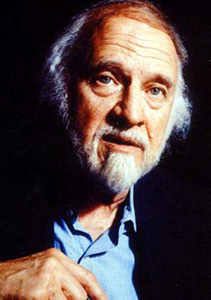
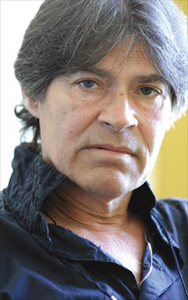
The Founding Fathers (and Mothers) of Horror Literature

Originally posted on Wednesday, ‎August ‎31, ‎2011, ‏‎5:20:00 PM

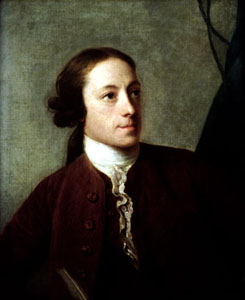
Great Grandpa Walpole

Horace Walpole (1717 – 1797)

“Posterity always degenerates till it becomes our ancestors.” – Horace Walpole

The horror genre, like it or not, has its roots deeply in Gothicism. In fact, although today gothic lit is a subgenre of horror, horror sprang from Gothicism. We have Mr. Walpole to thank for that.

Read: The Castle of Otranto, 1764

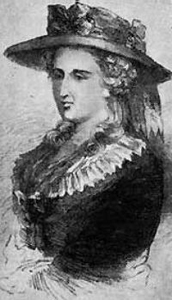
Great Aunt Radcliffe

Ann Radcliffe (1764 – 1823)

“It is women who bear the race in bloody agony. Suffering is a kind of horror. Blood is a kind of horror. Women are born with horror in their very bloodstream. It is a biological thing.” –Bela Lugosi

Ah, the first matriarch of the genre. You quite simply have to love her – long-windedness and innocence be damned. I talk about Radcliffe in my discussion of horror and terror, here.

Read: The Mysteries of Udolpho, 1794

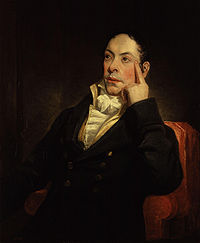
Great Creepy Uncle Lewis

Matthew Lewis (1775–1818)

“Matthew Lewis [was] the genre’s first punk, the Johnny Rotten of the Gothic novel.” – Stephen King

Lewis used Radcliffe and Walpole’s ideas and twisted them all to hell. Talk about embracing the dark side. This is one uncle you don’t want at your family reunion.

Read: The Monk, 1796

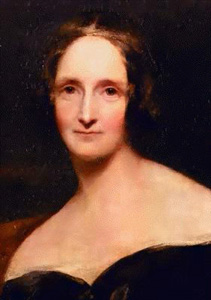
Mammy Shelley

Mary Shelley (1797 – 1851)

“…Monsters are real, and ghosts are real too. They live inside us, and sometimes, they win.” –Stephen King

Ms. Shelley’s is the first gothic horror novel to be considered literary. She also, arguably, helped fuel the zombie genre. For that, I salute her.

Read: Frankenstein: or, The Modern Prometheus, 1818

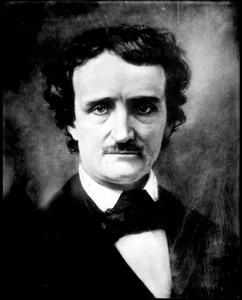
Papa Poe

Edgar Allan Poe (1809 – 1849)

“Poe was the first writer to write about main characters who were bad guys or who were mad guys, and those are some of my favorite stories.” – Stephen King

“Now all of my mail goes out with a picture of Poe on the cover, and under that stamp I always write: ‘My Papa.’” — Ray Bradbury

Papa Poe. The first American writer to popularize the scary, dark underworld of the macabre. We all owe him homage, from sci-fi to mystery to poetry to horror. I sing Poe’s praises here and here.

Read: short stories such as “The Tell-Tale Heart,” in the collected works of Edgar Allan Poe, 1843

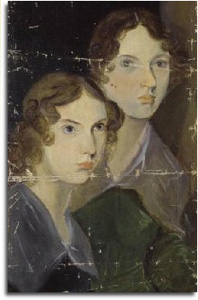
Great Aunties Bronte

Emily Bronte (1818 – 1848)

Charlotte Bronte (1816 – 1855)

“The intense horror of nightmare came over me: I tried to draw back my arm, but the hand clung to it, and a most melancholy voice sobbed, ‘Let me in – let me in!’” — Emily Brontë (Wuthering Heights)

“”Of the foul German spectre – the Vampyre.”” –Charlotte Brontë (Jane Eyre)

It is, perhaps, unfair to clump these two fearless ladies together… but it’s so convenient. Welcome to the crew, Sisters Grimm.

Read: Wuthering Heights, 1847 & Jane Eyre, 1847

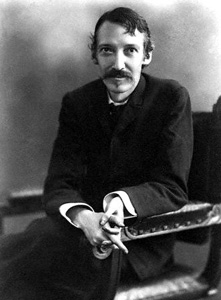
Great Uncle Stevenson

Robert Louis Stevenson (1850 – 1894)

“Quiet minds cannot be perplexed or frightened but go on in fortune or misfortune at their own private pace, like a clock during a thunderstorm. ” — Robert Louis Stevenson (Dr. Jekyll & Mr. Hyde)

Yet another horror author who has managed to earn the qualifier of “literary,” paving the way for us all.

Read: Strange Case of Dr Jekyll and Mr Hyde, 1886

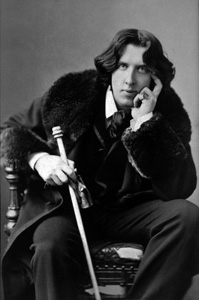
Great Uncle Wilde

Oscar Wilde (1854 – 1900)

“The public is wonderfully tolerant. It forgives everything except genius.” –Oscar Wilde, The Critic as Artist, 1891

For ghouls like me, Dorian Gray was the best part of English class in high school.

Read: The Picture of Dorian Gray, 1890

Great Step Uncle Twice Removed Stoker

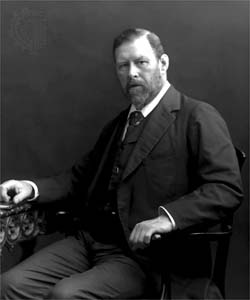
Bram Stoker (1847 – 1912)

“Listen to them – children of the night. What music they make.” — Bram Stoker, Dracula

Who doesn’t love their great step uncle twice removed? I know I do.

Read: Dracula, 1897

Great Uncle James

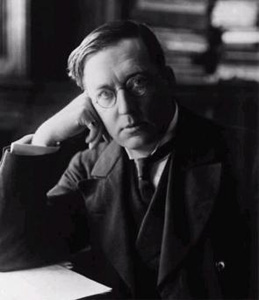
M. R. James (1862 – 1936)

“Reticence may be an elderly doctrine to preach, yet from the artistic point of view I am sure it is a sound one. Reticence conduces to effect, blatancy ruins it.” –MR James

I admit that I haven’t read anything by MR James. But based on how many scholars consider him influential, he’s gone to the top of my to-read list.

Read: Ghost Stories of an Antiquary, 1904

Great Uncle Lovecraft

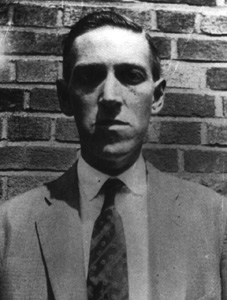
H. P. Lovecraft (1890 – 1937)

“[Lovecraft has exerted] an incalculable influence on succeeding generations of writers of horror fiction.” –Joyce Carol Oates

“[Lovecraft is] the twentieth century’s greatest practitioner of the classic horror tale.” –Stephen King

Lovecraft is well known for his “weird tales” that weave together sci-fi, fantasy, and horror. He’s one of the most-referenced of the horror subculture, so he’s worth a read.

Read: short stories such as “The Call of Cthulhu,” 1928

Granddaddy Bradbury

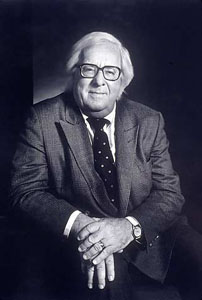
Ray Bradbury (1920 – present)

“My first experience of real horror came at the hands of Ray Bradbury.” – Stephen King

One of my personal favorites, Ray Bradbury almost single-handedly brought horror and dark fantasy to the forefront of the 20th century.

Read: short stories such as “The Scythe” in his collection The October Country, 1955

Uncle Matheson

Richard Matheson (1926 – present)

“I had written a short story, which I basically had ripped off from a Richard Matheson novel called I Am Legend.” — George A. Romero on Night of the Living Dead

“When I was a child we had a story from the library called ‘The White Silk Dress.’ A child vampire told the story in the first person, and I thought it was quite wonderful. I was 8 or 9 years old and I never forgot it. I wanted to get into that vampire. That was the interesting point of view to me – the people right in the center of it all.” — Anne Rice on Richard Matheson’s “Dress of White Silk”

“The author who influenced me the most as a writer was Richard Matheson.” — Stephen King

“[Richard Matheson is] one of the most important writers of the twentieth century.” — Ray Bradbury

Although I am Legend is a vampire novel, it drastically changed the face of the zombie genre, and was the first novel to popularize the concept of a post-apocalyptic world.

Read: I am Legend, 1954

Uncle Stevie

Stephen King (1947 – present)

“I thought The Shining was just absolutely wonderful. Stephen King reaches all kinds of people. In the beginning he was just dismissed out of hand, which was terrible.” –Anne Rice

“People want to know why I do this, why I write such gross stuff. I like to tell them I have the heart of a small boy — and I keep it in a jar on my desk.” – Stephen King

Who hasn’t heard of Stephen King? He’s the most popular horror author of our time – arguably of all time. And gosh, isn’t he quotable?

Read: Carrie, 1973

Aunt Rice

Anne Rice (1941 – present)

“I know nothing of god or the devil. I have never learned a secret nor found a cure that would damn or save my soul.” — Anne Rice

Anne Rice is fiercely intelligent. She combined that with quality writing and a juicy subject to create a resurgence of the vampire.

Read: Interview with the Vampire, 1976

Aunt Andrews

VC Andrews (1923 – 1986)

“The face of fear I display in my novels is not the pale specter from the sunken grave, nor is it the thing that goes bump in the night. Mine are the deep-seated fears established when we are children, and they never quite go away: the fear of being helpless, the fear of being trapped, the fear of being out of control.” –VC Andrews

The most modern popular gothic, Andrews went back to the roots of the genre but set it in modern day. Make no mistake, these books might be shelved under horror, but they are gothic through and through.

Read: Flowers in the Attic, 1979

Uncle Ketchum

Jack Ketchum (1946 – present)

“Who’s the scariest guy in America? Probably Jack Ketchum.” — Stephen King

Another one of my personal favorites, Jack Ketchum is the epitome of contemporary horror. Prolific, critically acclaimed as well as wildly popular, well-spoken, and photogenic with unusually gorgeous hair, who wouldn’t love him?

Read: Off Season, 1980

Aunt Hamilton

Laurell K. Hamilton (1963 – present)

“I wasn’t like most girls.” –Laurell K. Hamilton

Ah, Ms. Hamilton. Anyone who reads my blog knows how much I love and am inspired by her. She’s not strictly horror, but that’s actually why she’s on this list. LKH has had a huge part in the division and dispersement of horror into other genres. And although I adore her rule-breaking genre melding (her books could easily be shelved in horror, fantasy, mystery, or even erotica — her main vampire made my Top 10 Sexy Vampires list), I admit that I am hoping for a horror renaissance any day now. Hopefully brought about in part by yours truly.

Read: Guilty Pleasures, 1993

What do you think? I know I left off someone you love! Go ahead, be outraged. Share your faves who didn’t make the list in the comments below. Don’t forget to tell us why!

Posted in Authors | Tagged , , | 5 Comments

Muse Burnout (It’s Not What You Think)

Originally posted on Wednesday, ‎August ‎24, ‎2011, ‏‎1:45:00 PM

Lately I have been noticing the popularization of something I’m going to call Muse Burnout. And despite what you might think, I don’t mean that writers all over the world suddenly have tired Muses and a lack of ideas. What I’m referring to is the general and seemingly sudden social rebuttal of the concept of a “muse” at all.

Everywhere I go, I am reading rejections of the idea that writing is anything magical. Articles in literary magazines, quotes on Twitter, angry rants in blogs. The whole writing community seems to be screaming, “WRITING IS WORK, DAMNIT. STOP GIVING THE DAMN MUSE ALL THE CREDIT.”

And I get it. I really do. Because it’s true. Writing is hard work. Exhausting, frustrating, agonizing work that thousands of people have dedicated their lives to pursuing. And when the going gets tough, well, the tough keep chugging along and fighting through and struggling to maintain daily word counts in spite of their dry spells. I think the continuance of writing even when the luster has worn off is admirable and necessary for success.

Writing IS work – work that comes entirely from the writer’s endless source of determination and commitment.

Here’s the thing: it’s also magical.

I don’t believe in magic. I really don’t. I don’t believe in any supernatural things, actually, so I certainly don’t believe that there’s a mystical being who waits around in the Aether to bring you slammin’ ideas for your new short story. And she certainly doesn’t have wings.

But I do think that the concept of the Muse is a convenient metaphor for inspiration that seems almost magical. You know, for that first initial spark that calls us to start imagining new, creative things. The reason writers call themselves artists. The reason we all became writers to begin with – because let’s face it: there were easier careers to go into. No one chooses writing because they want to make money or become famous. They choose it because it calls to them. Because they’re so bursting with ideas that they feel like they have to write them down.

We begin because of the Muse. We stay because we’re hard workers.

Admitting to the easy, fun, inspiring parts doesn’t make the hard, dreadful, draining parts any less impressive. If you admit that you have no idea how you came up with that splendid idea, people aren’t going to be any less admiring that you stuck through and turned it into an 80,000 word novel.

I believe that when most of us speak of the Muse, we don’t mean to imply that writers aren’t doing that work. I, at least, am speaking of it as a part of myself. It is a metaphor for the subconscious, the back wheels and cogs of the mind that work without my intending them to. I don’t use the Muse as a way to take credit away from hard-working writers. I use it as an acknowledgement that, sometimes, there are parts of ourselves that are greater than the credit we give them. Bits of us that go overlooked, under-examined. And when things come from that place, the result is truly magical.

So please, stop yelling at those of us who stand by the tradition and analogy of the Muse.

And after all of this, if you still disagree with the metaphor of the Muse… if you’ve never felt that magic sparkle, that little itch that drags you along… I’m very, very sorry.

It’s wonderful.

Posted in The Art | Tagged , | 2 Comments

Evolution of a Sonnet

Originally posted on April 22, 2011 at 12:26 PM

Maybe you’re a free-verse poet fighting the idea of testing out new forms. Intimidation, preconception, and lack of knowledge are all very real factors. Or maybe you’re not a poet at all. Maybe you see these poems and wonder how the hell anyone goes about creating them. Or maybe you’re a seasoned poet who wants to take a peek behind another poet’s bed-curtains.

Either way, you’re in the right place. In this blog, I will take you through the creation of a sonnet (the horror poem posted Wednesday: read it here first), from brainstorming, to writing, through critiques, to final product, and beyond.

Why listen to me? Not to toot my own horn, but I do know a thing or two about sonnets. I placed first in NFSPS’s Dorman John Grace Memorial Award – a national sonnet contest. Oh, and by the way – this blog post isn’t as long as it looks. Most of the text is the same thing being re-posted with slight alterations, so you can see the poem’s evolution. Let’s jump in.

Step 1- The Spark: Finding subject matter.

When I sit down to write a form poem – in this case, a Shakespearean sonnet – the first thing I need is a distinct idea. I would never sit down with a form and just start writing to see what comes out. I believe that far too many weak, meandering poems are born that way. For me, the spark must come first. Then the form.

In this particular example, the idea came in the form of a nightmare. Although I’m somewhat embarrassed by the hap-hazard scribble I’m about to post, I resisted the urge to edit it. The point is that all ideas start somewhere, and one must jot them down before they dissolve into the biosphere of Forgotten Schtuff. Bizarreness and all. This is only the end of a long and involved dream, in the effort to conserve space. Here are my jottings:

Dad gives me the car keys and tells me to go pull the car around. I look out to the parking lot and see the rows of gloomy, polished vehicles. There is a black-cloaked figure in the shadows of each one. I see ours: a dark blue van. I hold the remote car key in my right hand and a lighter in my left. I begin to walk to the car, and my dad waits by the storefront. As I near, I see a man trying to break into the driver’s side.

I call back over my shoulder, “Dad, is that a vampire?”

He hollers back, “No, it’s just a really nondescript car. Lots of people want to steal it.”

I see our maid across the parking lot, still in her ridiculous uniform, wearing a backpack, walking with my brother to the nearby highway. I can see a large, dark stain in the middle of my brother’s back. I think it might be blood. She looks back over her shoulder at me and winks. My brother never looks back.

As I approach, the man gets in behind the wheel and closes the door. I walk right up to the car, and he turns to look at me. His eyes are red: vampire. Horror pounds through me as he smiles. I know that I cannot outrun a vampire. I use my clicker-key to lock the door. He unlocks it with his long, thin fingers. I lock it. He unlocks it. I lock it again and begin backing away. This is a game to him. He thinks it’s fun. He knows he’ll win. I keep locking it and retreating as he continues to leer at me and unlock it. I jamb “lock” again with my thumb and realize I’m too far away now. The battery doesn’t reach that far.

He gets out and speeds toward me at a preternatural pace. I try to thumb on my lighter, but it’s in my left hand, and I’m right handed. He is a few feet away from me. I frantically try to light it. I can feel the skin on my thumb tearing from the effort. He has almost reached me.

Step 2- Seeing the Poem: Realizing that this idea will take the shape of poetry.

This sloppily written dream remained in my “Needs Work” folder for several years. One day, I realized that it would never be any sort of logical short story or even flash fiction in its current state. It was too strange. Too obviously a dream. And the one part of it that I really liked – the concept of the battery in the car remote running out of distance and the creepy guy being able to get out – was too short to be its own story. *light bulb* This was a poem.

As soon as I saw the poem within the idea, I wanted to act on it. The sonnet form called to me. Getting to know which forms suit which poems takes practice. Some forms are heavy on repetition, for example, and thus might not be suited to a narrative with a surprise ending, such as this. The more you work with various forms, the clearer it will become to you which ones “sing” to you, and which are suited to which types of ideas.

So I knew I wanted a sonnet. I decided that some elements of the dream didn’t bolster the core idea I so loved. My dad, brother, and the maid were minor characters and could be cut for space. The fact that the creepy guy was a vampire was irrelevant, as he never actually drinks blood, shows fangs, or uses powers. The lighter was a nice touch, but I knew it was too much to squeeze into a 14-line form. (One lesson I’ve learned in my four years or so of writing and critiquing: never be afraid to change your original ideas.) So I cut it all down to this:

I don’t realize there’s a man in my car until I’m almost to the door. He is shadowy and sitting in the driver’s seat. I stare at him in shock from only a few feet away and he smiles. Panicked, I use my car remote to lock the door. The mechanical click rings through the dark, empty parking lot. He reaches up with long thin fingers and unlocks it—the sound is muted. I begin to back away as I thumb the “lock” button again. He unlocks it again from inside the car. I am speeding backwards now, stumbling on my feet. He is laughing through the silence of the car window. This is a game to him. I lock the door. He unlocks it. I lock it. He unlocks it. I lock it—but this time there is no mechanized click. I realize that I am too far away now; the battery can’t reach anymore. I glance around me. The parking lot is empty and the store is closed. I have nowhere to go, nowhere to run. With that sickening grin, he pulls up the manual lock from the inside and opens the car door.

Step 3- Building the Bones: Setting up your template and getting rhyme ideas.

At this point, I search my paragraph for potentially rhyme-able words that carry enough significance to be used in the poem. I bold and highlight them for easy reference. As you’ll see, I don’t end up using all of these, and I use several that I didn’t find at first.

I don’t realize there’s a man in my car until I’m almost to the door. He is shadowy and sitting in the driver’s seat. I stare at him in shock from only a few feet away and he smiles. Panicked, I use my car remote to lock the door. The mechanical click rings through the dark, empty parking lot. He reaches up with long thin fingers and unlocks it—the sound is muted. I begin to back away as I thumb the “lock” button again. He unlocks it again from inside the car. I am speeding backwards now, stumbling on my feet. He is laughing through the silence of the car window. This is a game to him. I lock the door. He unlocks it. I lock it. He unlocks it. I unlock it—but this time there is no mechanized click. I realize that I am too far away now; the battery can’t reach anymore. I glance around me. The parking lot is empty and the store is closed. I have nowhere to go, nowhere to run. With that sickening grin, he pulls up the manual lock from the inside and opens the car door.

Next I make my template. I usually take a couple of lines from another poem (preferably one of mine) to get my mind into the meter of the form. I put these at the top for reference. It just helps my rhythm.

Then I lay out the rhyme scheme. In poetry, rhyme scheme is traditionally signified by letters. Thus “A” lines would all rhyme with each other, “B” lines would rhyme, etc. (The G’s are indented because couplets on Shakespearean sonnets often are.)

Finally, I fill in the highlighted words from above where I think they might be useful. Here’s what it looks like:

My brother had a frog with four webbed feet—

a gift. My mother wouldn’t touch the thing,

Title

A door
B dark
A store
B park
C
D smile
C
D while
E
F
E
F
G car
G far

Step 4- Filling in Flesh: writing the words.

Writing the rough draft is a crucial stage. The most important thing, for me, is to write it quickly. Just like with prose: you are not allowed to edit as you write. Editing is what you do after you write. You’ll see below that I put “wond’ring” in because I couldn’t think of a full word that could fit there. If I had stopped and thought about it, or God forbid gone to a thesaurus, it might have put a hex on the whole poem. Power through. No excuses. Here’s my very first draft:

My mind is dreaming now about my date
ahead and wond’ring where I might have parked,
and grateful that the store was open late
I walk without a thought into the dark.
It isn’t till my car is feet away
that I look up and see the man inside.
His shadowed face, to me, seems to convey
evil intent; I’m frozen in mid-stride.
Just sitting in the driver’s seat, he grins;
I, fumbling for my car remote, press lock,
but long thin fingers gently pull it up again,
and while I thumb it down I start to walk
backwards from the stranger in my car
but I know the battery won’t reach that far.

Step 5- Becoming Presentable: fixing up the rough stuff.

Now I get to fix those parts that I knew were crap even as I wrote them. In truth, this step might become steps 5, 6, & 7, too – depending on how many drafts you go through. That’s fine. You’ll see that between step 4 and step 5 (we’ll call it 4.5) I tried yet again to smooth that last couplet. This is also usually about the time I give my poem a title. (I have to save it under something, even if the title changes later.)

Cat and Mouse

My mind is dreaming now about my date
ahead and puzzling where I might have parked,
and grateful that the store was open late,
I walk without a thought into the dark.
It isn’t till my car is feet away
that I look up and see the man inside.
His shadowed face, to me, seems to convey
evil intent; I’m frozen in mid-stride.
Just sitting in the driver’s seat, he grins;
I, fumbling for my car remote, press lock,
but long thin fingers pull it up again,
so while I thumb it down I start to walk
backwards from the stranger in my car…
the battery can only reach so far.

Step 5.5- Putting on Makeup: arguing with yourself.

Cat and Mouse

My mind is dreaming now about my date
ahead and puzzling where I might have parked,
and grateful that the store was open late,
I walk without a thought into the dark.
It isn’t till my car is feet away
that I look up and see the man inside.
His shadowed face, to me, seems to convey
evil intent; I’m frozen in mid-stride.
Just sitting in the driver’s seat, he grins;
I, fumbling for my car remote, press lock,
but long thin fingers pull it up again,
so while I thumb it down I start to walk
backwards as he mouths from within my car…
“The battery can only reach so far.”

Step 6- Getting Critique: the feedback of others is invaluable.

At this point, the poem is as good as I can get it without going insane. I take it to my trusted poetry critique group. This is what they told me:

Cat and Mouse 1

My mind is dreaming now about my date
ahead and puzzling where I might have parked,
and grateful that the store was open late,
I walk without a thought into the dark.
It isn’t till my car is feet away
that I look up and see the man inside.
His shadowed face, to me, seems to convey 2
evil intent; I’m frozen in mid-stride. 3
Just sitting in the driver’s seat, he grins;
I, fumbling for my car remote, press lock, 4
but long thin fingers pull it up again,
so while I thumb it down I start to walk
backwards as he mouths from within my car… 5 6
“The battery can only reach so far.” 7

1- The title helps the understanding of what happens in the poem, but is perhaps too playful. Cat and mouse could easily be a poem about something silly. This poem is more sinister.

2- Slight variation of meter in the emphasis of “to” instead of “seems (wrenched meter)

3- “Evil” is trochaic.

4- “I” is the beginning of a trochee as well, to some readers. Or, with the comma as a beat, this line could be read to have 6 feet instead of 5.

5-6- “Backwards” is trochaic, and “from within” is a bunch of nothing.

7- “Battery” might be momentarily confusing. Car battery? No, remote battery.

*For help with terminology, refer to Poetry 101: A Crash Course on Poetic Devices.

Step 5- Evaluating & Implementing Critique: deciding what goes and what stays.

There’s no reason to be afraid of critique. It is just someone else’s opinion. You are still the writer. If they say “this sounds bad,” and you disagree, you don’t have to change it. It’s your creative project, remember? Consider, decide, and act. Here’s what I changed and didn’t change.

Cat and Mouse 1

My mind is dreaming now about my date
ahead and puzzling where I might have parked,
and grateful that the store was open late,
I walk without a thought into the dark.
It isn’t till my car is feet away
that I look up and see the man inside.
His shadowed face, to me, seems to convey 2
evil intent; I’m frozen in mid-stride. 3
Just sitting in the driver’s seat, he grins;
I, fumbling for my car remote, press lock, 4
but long thin fingers pull it up again,
so while I thumb it down I start to walk
backwards as he mouths from within my car… 5 6
“The battery can only reach so far.” 7

1- I agreed completely, and in fact went into it saying, “I’m still not sure about this title.” Full disclosure is always best. They agreed, confirming my instinct, and I changed it.

2- I decided that I’m okay with this one. I’m not a purist. This poem might be disqualified form a strictly-judged sonnet contest, but I’m okay with that. Even Milton and Frost didn’t live and die by the regularity of their meter. Who am I to quibble?

3- Same as above. In fact, I like that “evil” throws off the beat. It has meaning to the poem that this word should disrupt the simplicity of the verse above it.

4- I actually like this confusion, as it occurs around “fumbling,” which is representative of the meter there. In cases such as these, form informs meaning.

5-6- This line is a mess. I felt that instinctively, as you can see in my several attempts at rewriting it. I knew I wanted it to end on “car,” but the meter was too irregular to be intentional. I allowed myself to let go of and change words, and it became much easier.

7- I agreed that “battery” might be misleading, but I had to keep the meter, and I didn’t want to repeat the word “car” since the last line ended with it. One of my critique partners suggested “fob remote,” but a quick survey on Facebook showed that about 50% of every-men don’t instantly know what that is (including me). The last thing I want is to leave my readers puzzling on the last line with a vague image/word they have to look up. So I went with “key remote.”

Step 6- Show Worthy: sit back and admire your work.

You can see the changes/not changes I implemented below. This is also where I decided that the indention of the couplet didn’t serve my poem.

Scarcely Caged

My mind is dreaming now about my date
ahead and puzzling where I might have parked,
and grateful that the store was open late,
I walk without a thought into the dark.
It isn’t till my car is feet away
that I look up and see the man inside.
His shadowed face, to me, seems to convey
evil intent; I’m frozen in mid-stride.
Just sitting in the driver’s seat, he grins;
I, fumbling for my car remote, press lock,
but long thin fingers pull it up again,
so while I thumb it down I start to walk
away. He’s caught, but mouths from in my car:
“The key remote can only reach so far.”

A few things I’d like to note here, for those who are interested. This poem is (primarily) iambic pentameter. Lines 1, 7, and 12 employ enjambment. The rest of the lines are end-stopped. If read (in my opinion) incorrectly, line 7 could become wrenched meter; if read correctly (in my opinion) it breaks the iambic pattern. Want to know what all of this means? Refer to my post about poetic devices.

Step 7- Share: give it to your friends, read it at the open mic, and/or seek publication.

Not everyone shares my goals of publication. That’s perfectly fine. But I will admit that if you’ve spent so much effort on a poem… I can’t understand why you wouldn’t want to share it with someone.

The fate of this particular poem is up for grabs, as most places consider posting on blogs “publication.” Contests almost always do, so I can’t enter any of those, which, honestly, isn’t that big of a loss. Most sonnet contests are biased against horror subject matter, and most horror contests are biased against traditional forms. So if I find a venue that accepts previously published horror sonnets (lol) I might get it published as a stand-alone. Otherwise it will have to wait until my horror collection Around Dark Corners gets published. You see what I sacrifice for you guys?!

If you decide to give my method a try, I’d love to hear how it turns out! Happy poem-building!

Posted in Advice for Poets | Tagged , | Leave a comment

“My vampires are nothing like Edward Cullen” And Other Unnecessary Disclaimers

Originally posted on Monday, ‎May ‎30, ‎2011, ‏‎2:10:00 PM

Okay, writers, readers, and media-mongers, listen up. I’m only going to say this once, because I’m tired of hearing it. I’m tired of thinking it. I’m tired of hearing other people say they’re tired of thinking it. So this is once and for all, a general, blanket-statement for all authors who would like to be included:

I write _____ (fill in the blank: horror, urban fantasy, paranormal romance, YA… ), but my _________ (vampires, werewolves, love story, characters… ) are nothing like _________ (Stephanie Meyer’s, JK Rowling’s, Carrie Ryan’s, Stephen King’s, Charlain Harris’s… ).

I am a horror writer. I used to answer the question “So what do you write?” with some degree of discomfort, knowing certain books and stereotypes I would instantly be associated with. But the truth is, I think any commercial genre faces this, and we all have to screw up our courage and own what we write. We love it, other people do too, and that’s nothing to be ashamed of.

I think all of this instant disclaimer business is unnecessary embarrassment. It’s not about one genre or another; it’s about self-esteem and taking pride in what you write. Write about people being hacked apart by a circular saw? Own it. Write about sexy vampires seducing virgins? Own it. Write highfalutin lit-fic about seemingly mundane things? Own it. That’s my vote, anyway. We should all take pride in what we do, and we should try to find ways to respect what other people do as well.

So all together now, for one last time:

I write horror, but my vampires are nothing like Edward Cullen (or, for that matter, like any of these).

I write fantasy, but my wizards are nothing like Dumbledor.

I write romance, but my heroines are nothing like Elizabeth Lowell’s.

Get it?

Good.

Now we can move on, right? Write.

Posted in Advice for Writers | Tagged , | 2 Comments

Top 10 Sexy Vampires

Originally posted on Wednesday, ‎May ‎25, ‎2011, ‏‎4:30:00 PM

1. Jean-Claude, Anita Blake series by Laurell K. Hamilton

There are plenty of sexy-ass vampires to choose from in Laurell K. Hamilton’s bestselling Anita Blake series, but I have always been partial to the Master of the City of St. Louis: Jean-Claude. (He’s all comic booked-up here, but in my head he’s not overly muscled like that.) Born a peasant in 17th century France, this pale dream was chosen for his beauty and seduced his way to the top. Now he’s a legal American citizen who owns a vampire strip club. Screw “Team Edward.” I’m Team Jean-Claude.

2. Deacon Frost (Stephen Dorff) Blade

How can anyone resist that smile? Smexy with a nice dose of evil. Oh, yum.

3. Black Hat, Priest

This movie isn’t really very good. I mean, it’s not bad, but it’s not great. By far, the best part was when Black Hat turned to the camera and smiled – flashing just the right amount of fang. He’s the only reason I might be persuaded to see the inevitable sequel.

4. Brides of Dracula, Dracula by Bram Stoker

These deathly beauties are depicted differently in every movie version of Dracula, but honestly, the book does it best – just the right hint of sexual provocation without going into explicit detail. Any imaginative reader can fill in the blanks.

5. Lestat de Lioncourt (Tom Cruise) Interview with a Vampire by Anne Rice

Naughty, naughty vampire. Lestat makes bad look so, so good.

6. Santanico Pandemonium (Salma Hayek) From Dusk Til Dawn

Salma Hayek is probably the main attraction for many repeat viewers of this fun vampire romp. She starts out doing a dance in a bikini with a snake wrapped around her. She is the epitome of “seductress.”

7. David (Kiefer Sutherland) The Lost Boys

I like all of the Lost Boys, but Kiefer Sutherland as David is the head blood-sucker, and I’ve always been a sucker (forgive me) for a strong leader… even if he’s dead. And besides, who the hell else can make a mullet look good?

8. Ivy Tamwood, Rachel Morgan series, Kim Harrison


As far as I know, there haven’t been any movie, TV, or comic book adaptations of these books yet, but I imagine Ivy would look sort of like Victoria Beckham. Tall, confident, and deadly, Ivy can rival any vampire on this list. Oh, and did I mention she likes girls? Nice.

9. Louis (Brad Pitt) Interview with a Vampire by Anne Rice

Louis is superbly portrayed by Brad Pitt in the movie version of Anne Rice’s famous book. Sentimental and very human, Louis is seduced into vampirism (and more?) by the slightly more sinister Lestat. His ethical battle against his need for blood strikes a strong chord in its similarity to the human battle to withstand evil. Blood, lust, and morals, what more could a girl ask for?

10. Akasha (Aaliyah), The Queen of the Damned by Anne Rice

This film kind of sucks, but there is no denying that Aaliyah as the first vampire is a fierce beauty.

Posted in Vampires & Zombies | Tagged , , | 2 Comments