What Non-Writers Picture When Writers Say…

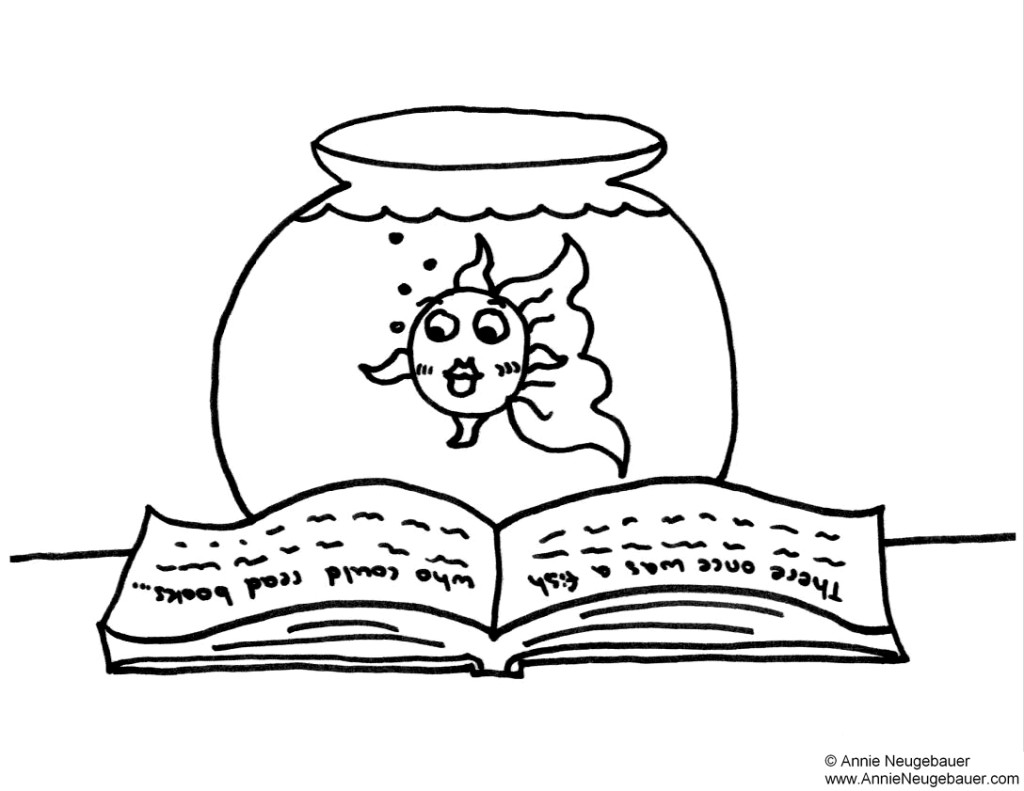
beta reader

beta reader

What it is to writers: a critique partner who reads your completed manuscript and gives you final feedback. Often “beta” for short, e.g., “I’m still waiting to hear back from my beta reader.”

What it is to non-writers: a surprisingly intelligent fish.

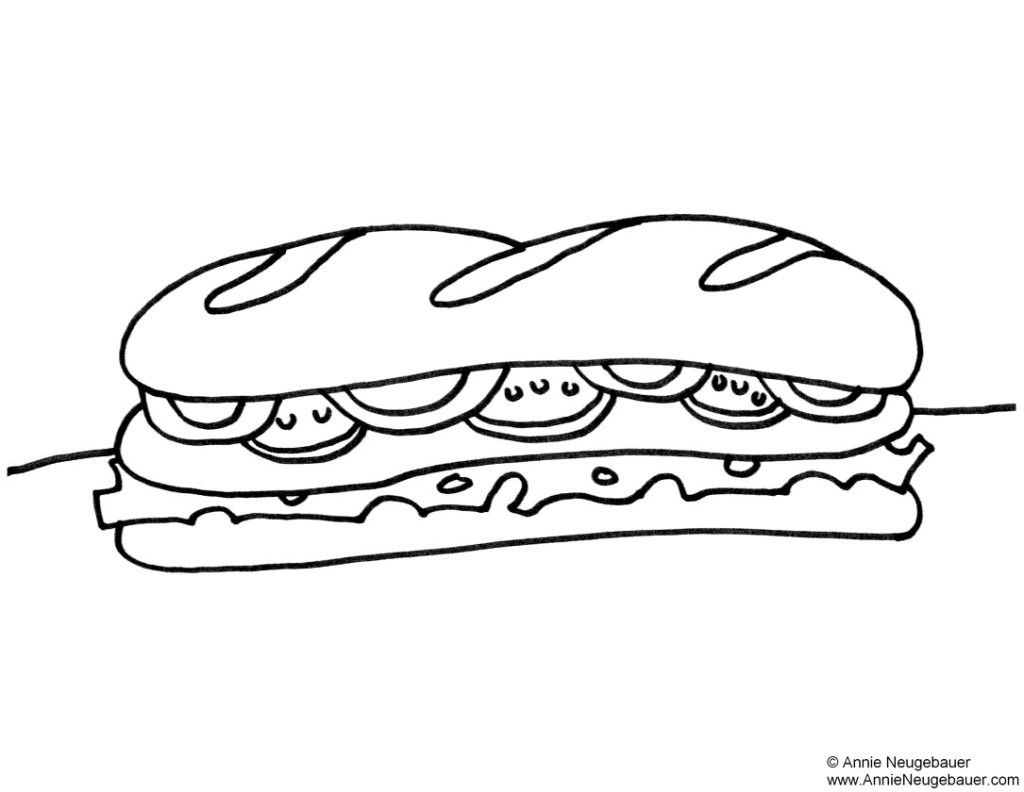
sub

sub

What it is to writers: an abbreviation for “submission,” e.g., “I sent out three new subs today.”

What it is to non-writers: a tasty sandwich.

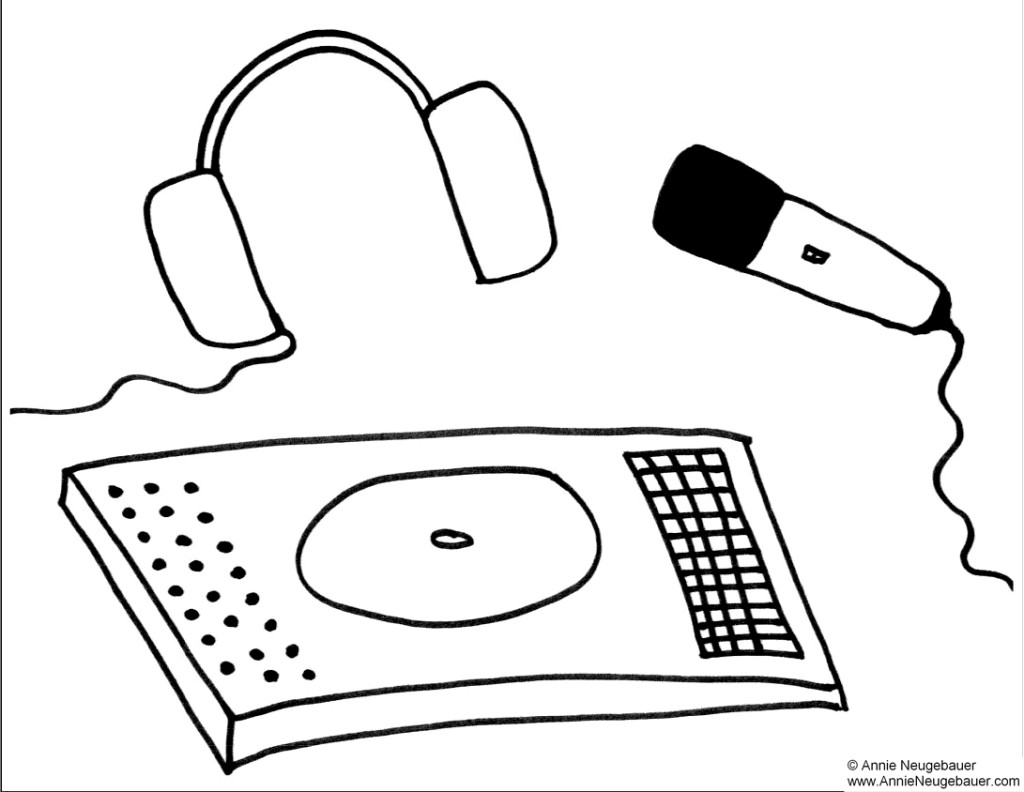
MC

untitled4

What it is to writers: an abbreviation of “main character,” the protagonist, e.g., “I’m really putting this MC through hell, poor thing.”

What it is to non-writers: the dude with the headphones who drops mad beats.

literary canon

literary canon

What it is to writers: a collection of generally publicly agreed upon literature, e.g., “Most of what I read in school is in the literary canon.”

What it is to non-writers: the fate of books you can’t stand.

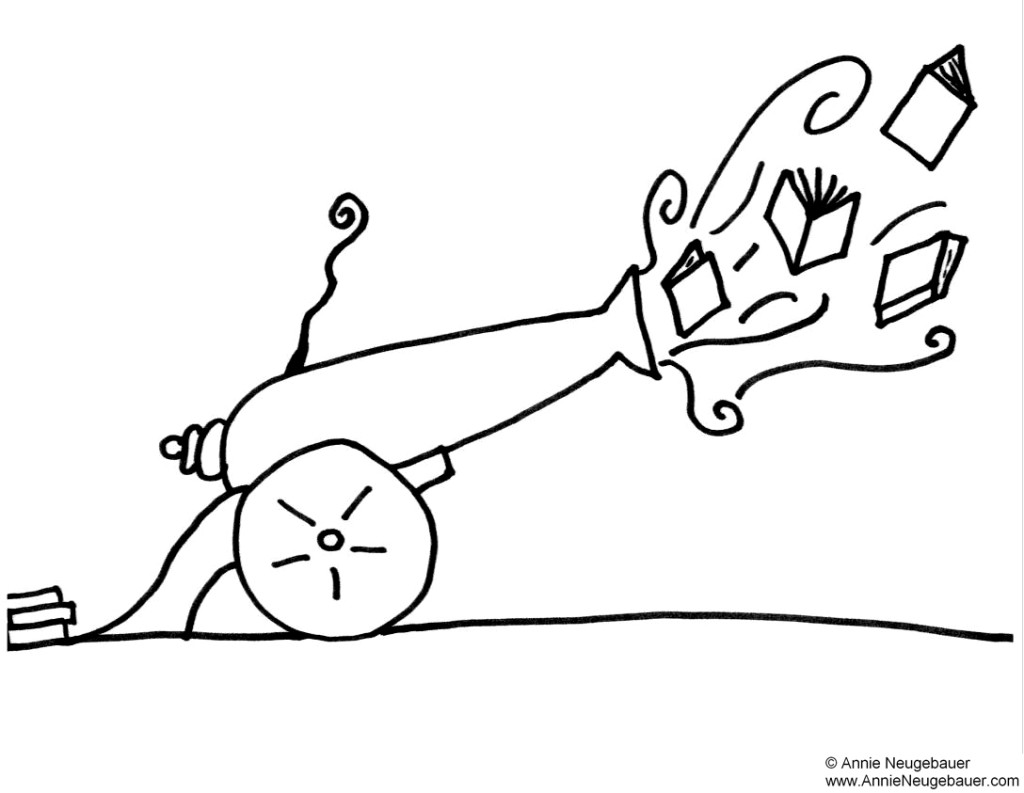
WIP

WIP

What it is to writers: an abbreviation of “work in progress,” e.g., “I’m going to murder this WIP if I can’t finish by Friday.”

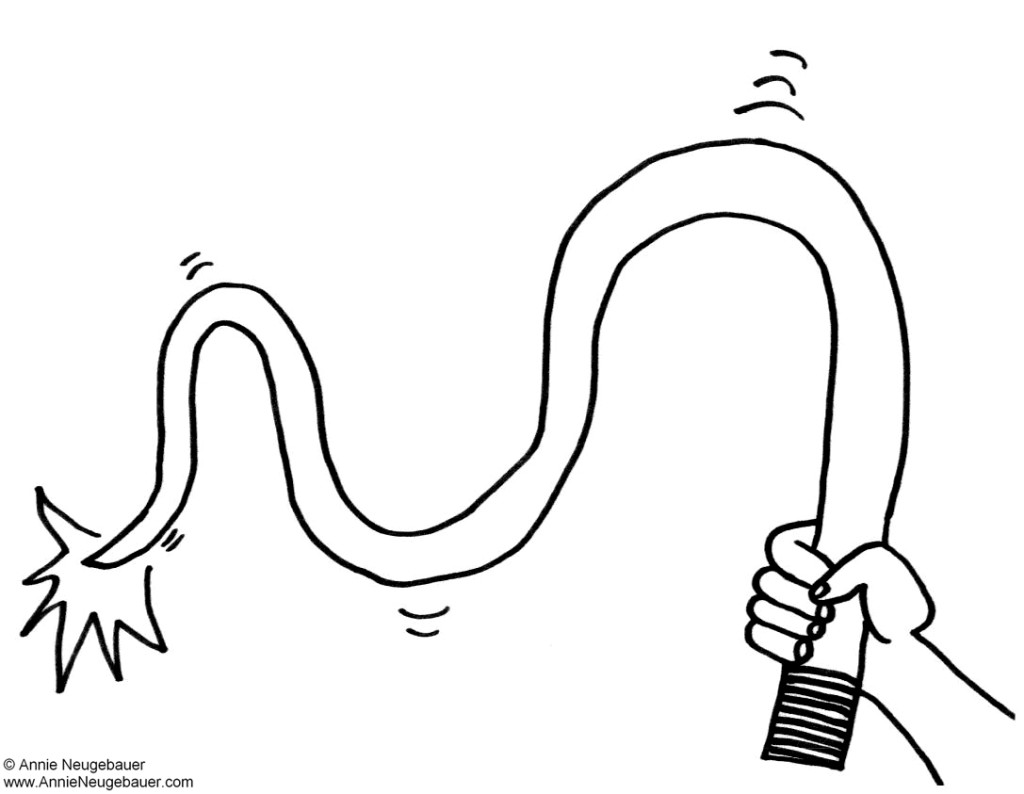
What it is to non-writers: Indiana Jones’s and/or Christian Grey’s tool of choice – depending on your level of kink. 😉

~*~

There you have it! Just a little fun for this week, because I felt like doodling. =)

Writers, do you have jargon that confuses your friends and family? And non-writers, what lingo do we use that throws you for a loop?

Share this:
Facebooktwitterredditpinterestlinkedintumblrmail
Posted in Silly Stuff | 31 Comments

Why Some Novels Say “A Novel” on the Cover, and If Yours Should Too

Ever notice how some novels have “A Novel” written right on the cover, under the title? Maybe you have but haven’t thought about it. Or maybe it drives you insane. But if you tread in bookish enough circles, the subject will come up eventually.

The gist of it is… why? It seems obvious and redundant, possibly even snooty and declarative. Some people love it, some hate it, but no one seems to quite know why it’s done. I have some thoughts!

A Brief History

Now I’m not going to drag you through a complete history lesson of the novel, but I will say that as a literary format, it’s a relatively new invention. Lyrics, poetry, plays, journals, and essays are all much older. The novel, roughly recognizable as how we think of it today, didn’t gain any continuous popularity until the 18th century.

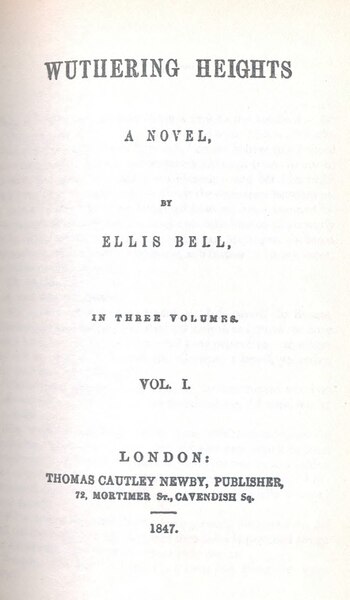
Take, for example, the first edition of Wuthering Heights.

Wuthering Heights

You can see on the title page that it says “A novel by [Emily Brontë’s pen name]”. This was published in 1847. Nowadays, a book with this title would likely leave off “a novel” and shelve it under fiction. But that’s because for us, today, a novel is the default. (That format won the literary battle, for now. Hurrah, novels!) If we’re told to read “this really good book,” most of us will assume it’s a novel unless otherwise specified.

Back then, however, people were still assuming things were essays, memoirs, travel journals–not to mention that people didn’t just take a bus to the library or order something off Amazon, where the genre was clearly labeled on the shelf. So you can see that “a novel” under the title served a necessary function.

That’s all well and good, but now that “a novel” is pretty much the default these days, why has that little clarification stuck around? It isn’t cut and dry, but my best guess is that there are several reasons, often more than one at a time. I’m going to hit the highlights below, followed by a flow chart so you (if you’re a writer) can decide if you want those two little words on your book, too.

Reasons People Use it Now

Tradition– Tradition is a heady thing. Wedding vows, national symbols, school colors: our lives are steeped in it. There’s something powerful about tapping into an experience or symbol that generations before have also experienced. In one way, it makes us feel more grounded, more connected to the past. It can also be a way of acknowledging one’s lineage, tipping the hat to those who paved the way. Tradition is in most facets of our lives. Why should literature be the exception?

Literary device– Remember how literary fiction uses devices outside of plot and character to send a message? Sometimes (more often than you might think) that message involves literary history, the act of writing, the art of storytelling, the format of words… in short, it involves novels themselves. In this case, literary context becomes a device. Which is part of why you see “a novel” on so many works of literary fiction, specifically. Those two words are already communicating with you; they’re setting you into the frame of mind to understand the message.

Prestige– And because literary fiction authors have used “a novel” often enough as a literary device for it to become noticeable… no doubt there have been other authors simply trying to cash in on this association. Literary fiction has quite a bit of prestige in some circles, and those who want in might use this to their advantage. Now, who’s doing it to further their message and who’s doing it to add some clout to their name is subjective.

Clarity– Is Eat, Pray, Love, a memoir, a self-help book, or a novel? You know if you’ve read it, but if you haven’t… you really might not. What about Goodbye, Columbus? How about A Thousand Mornings? Even Who’s Your Mama, Are You Catholic and Can You Make a Roux?* If an author (or publisher) is worried that the book could be misinterpreted from the title and cover alone, they might stick “a novel” on there just to be safe. With the growing prominence of online purchasing–where genres are a tag down at the bottom rather than a shelf you walk up to–this is not necessarily a paranoid choice.

Assertion– On a related note, have you ever noticed that many experimental novels have “a novel” on the front? It’s almost like they’re saying, “I know I messed with some things, but, really, this is a novel; I promise.”

Layout– I really think that designers sometimes include these two little words to help visually balance the layout of the cover. Length of the title, size and sharpness of the images/background, plus length of the author’s name all affect how a cover looks, and sometimes adding two words in the middle might help. Don’t knock it. These things matter. (Maybe not to you, but to someone.)

Trend– And, finally, the obvious one. The one that most likely accounts for 80% of current books that say “a novel” on the cover: It’s in style! And scoff at that all you want, but covers, titles, even genres come and go over the years; this is just another bit of choice that adds flavor to a book.

*(The answers, in order, are: memoir, novel, book of poetry, cookbook.)
 

Authors, Need Help Deciding?

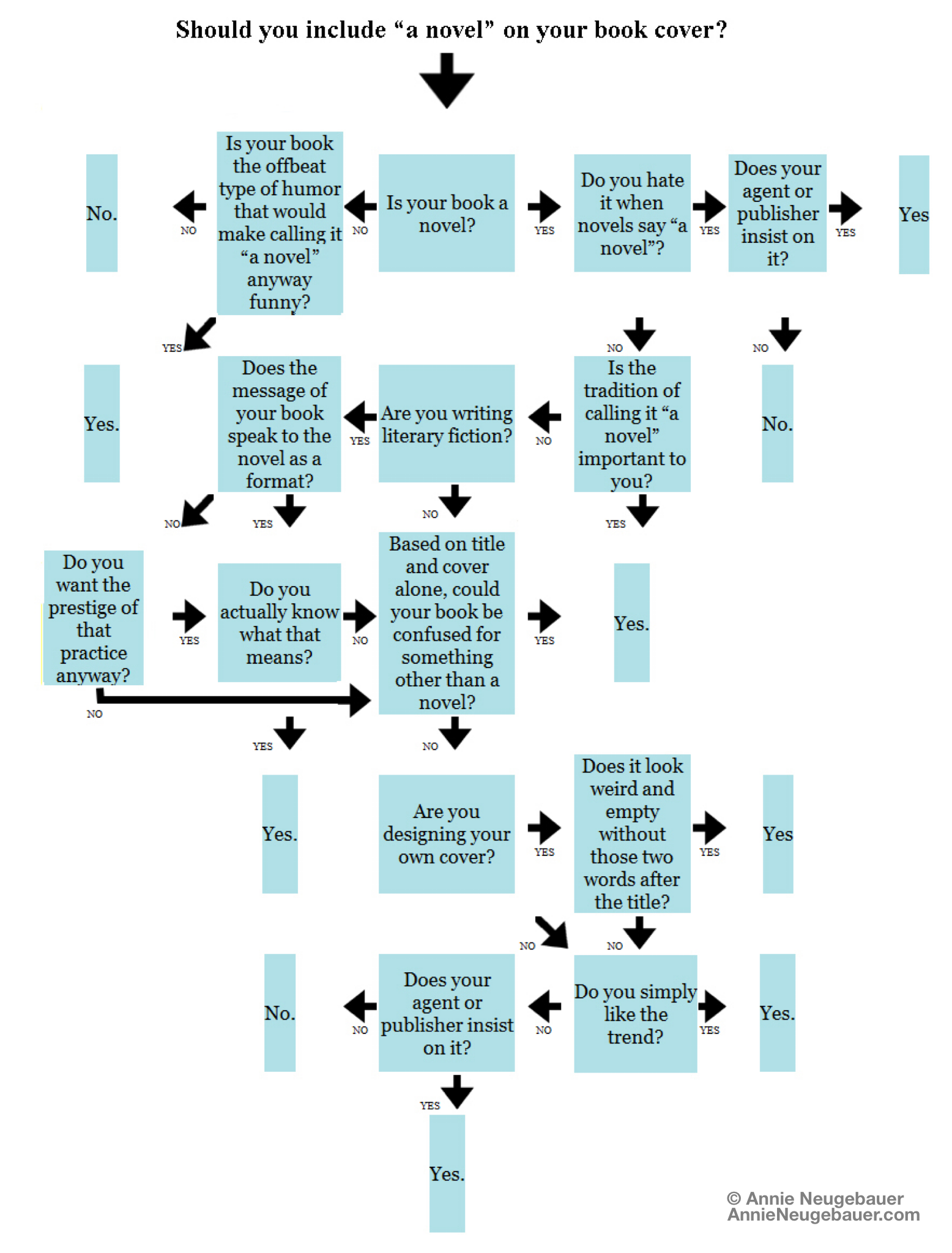
This might help get you started. (Y’all have no idea how long this took me.) Click chart to enlarge.


So, what do you think about this practice?

Authors, did you include “a novel” on your book? Writers, do you plan to?

Share this:
Facebooktwitterredditpinterestlinkedintumblrmail
Posted in Books | 31 Comments

Are You an Accidental Litterbug?

In the past, I’ve blogged about environmentalism a couple of times. Once to share some cool tips I’d found and thought of, and then a rather angry passionate post about how much I loathe litterers. It’s hard for me to explain how important this is to me. I guess, to put it simply, it’s my cause of choice. Hub-a-dub and I participate in our local chapter of Keep America Beautiful. We’ve “adopted” a half-mile spot where we go to collect litter six times a year, sorting it into trash and recycling. Our latest run was yesterday, and (of course) I was thinking the whole time, “I need to blog about this.” So here I am.

We pick the weekend day with the best weather, slather ourselves with sunscreen and/or bundle up with ear warmers, wrap the bottoms of our jeans with gators (Texas weeds are full of these vicious little sticker thingies), tuck one blue trash bag and one black trash bag in each pocket, and tromp on out. We’re provided with work gloves and two of those reacher grabby tools that patients are often given after surgery. I hold the recycling bag, Hub-a-dub holds the trash bag, and we walk the length of our road, there and back, picking up every piece of litter we can find. All in all, our spot takes about three hours and produces about two bags of trash and two bags of recycling. That’s a lot of litter for half a mile of non-highway road.

You might be surprised by what we pick up. Among the list in the short time we’ve been doing this, we’ve found a huge bucket, socks, batteries of all types, lots of candy, coat hangers, ribbon, CO2 cartridges, tires, tampons… Or maybe that doesn’t surprise you at all (which, I think, should be disturbing to all of us). Lots of the things we pick up – maybe half – were obviously intentionally littered. You’d have to do some sweet talking to make me believe that empty beer bottles, fast food containers, or aluminum cans were “accidentally” tossed out a car window.

But that’s just half, which is why I really wanted to write this post. If (by my conjecture alone) half of the litter we pick up seems intentional, that must mean that the other half seems unintentional. And, since I love all of my readers, I would like to believe that this is the only type of littering any of you would be doing: the accidental kind. So here’s a list of things to watch out for.

~*~

Lost pet and garage sale signs. Yes, these are necessary. But there are two key ways to keep your temporary signs from becoming just another sheet of paper for volunteers to pick up.

1) Attach it properly. Don’t use packing tape on a wooden telephone pole; the first storm will slide that right off. Use a staple gun on wood. And if you must use tape, tape all the way around the pole so that the tape touches itself in back, like a sticky hug. Not only will this prevent your sign from becoming litter, it will ensure that people can actually read it.

2) Go back out and collect your signs once you’re finished with them. Garage sale over? Get out and pull those suckers up. Recycling bin. Found your kitty? Yay! Now go pull down the signs. And I know it’s painful, but if it’s been a month or more and your dog still hasn’t made it back, it’s time to pull the signs down.

Loose trash in your can by the curb. Our neighbors do this, and every single Tuesday there’s litter on our street. You can’t throw small, light objects in your trash can and expect them not to blow out when the collection truck turns that thing upside down. Sometimes it’s tempting to throw small trash in the big bin for convenience, but stick it in your pocket instead and throw it in a little can later. Or if you find yourself constantly adding individual pieces to your big can, pop for some giant liner bags and tie it off before trash day comes. Your neighborhood will thank you.

Speaking of trash bags, you need one in your car. If you don’t have a designated spot for trash in your vehicle, you’re almost certainly accidentally littering. Because when you put that straw wrapper in your door, that sucker blows out the next time you get out of the car. Plastic grocery bags on the floorboard, receipts in your cup holder, wrappers in the door pockets: all of these things are lightweight and ready to travel on the wind. Buy a trash container for the inside of your car, or stick a gift bag in the console. If you use a plastic bag, be sure it’s firmly secured.

And while we’re talking about vehicles, let’s mention unsecured cargo. If you have a pickup truck, don’t put small items in the bed; put them in the cab. If there’s not room in the cab, tie them down in the bed. If you do this often, consider investing in an attached box for storage back there, or maybe even a bed lid. But it’s not only truck drivers who commit this offense. Anyone traveling with cargo outside their vehicle is at risk for accidental littering. So tie it down, strap it down, net it down; just don’t go until nothing’s going to move when you hit 70mph on the highway.

If you’re carrying trash from your car into a store, don’t set it at the very top of an overstuffed can. I know; it’s crazy tempting. You really don’t want to carry that stinky fast food bag into a nice store. But if the can outside their business is already full, everything at the top is at risk for being blown away and becoming litter. Most litter occurs within six yards of a trash can. Please don’t contribute to that. Walk inside and find a trash can. Or better yet, ask them to throw it away for you and let them know their outside receptacle is full; this will prevent others from littering, too.

Don’t put lightweight stuff in your yard. Pinwheels, fluffy decorations, fake plants… they can all become litter in the first strong wind to hit your yard. Think twice if what you’re putting out to be cute weighs less than ten pounds, and make sure you secure it if it does.

And finally, don’t throw your cigarette butts on the ground. One study I recently read found that 65% of smokers litter cigarette butts. You might think it’s strange that I’m including this in accidental litter, since this is obviously a choice, but here’s the thing: people who would never *dream* of tossing a fast food bag out the window don’t think twice about tossing out their cigs. The problem is that many smokers don’t think of cigarettes as litter. I can tell you, after hours of picking them up (number one thing we see, by far), that they most definitely are. They are ugly, dangerous to animals, and take years to decompose (they are not biodegradable; the filters have cellulose acetate in them) – not to mention the fire hazard. Please please please, if you smoke, think about where you’re going to put that butt before you light up.

~*~

So that’s my spiel for the week. My hope is that you found something here that you might not have thought of before, and that you can all help prevent accidental litter in the future. Be clean, be green, and have a great week.

Have a tip to add to my list? Share below!

Share this:
Facebooktwitterredditpinterestlinkedintumblrmail
Posted in Environementalism | Tagged | 15 Comments

2012 in Review: Lists, Lols, and Goals

I’m back from a much-needed break from work, including writing, the blog, and most social media. I feel refreshed, and looking back on the year, poignant, proud, and incredibly disappointed all at once. I thought I’d take this post to review my year.

blog stats

On the blog, things have been gradually and steadily building. This was my first full year here at WordPress since the move from Webs. I’m still incredibly glad I made that switch, as tedious and exhausting as it was. In 2012, I almost reached 100,000 page views (not quite – maybe a goal for next year), I’ve built relationships with many wonderful blog commenters, and over 6,000 people downloaded documents from The Organized Writer. I think that’s pretty awesome.

Numbers are great, but by far the most fun part of looking at a year of blog stats is the amusing (sometimes hilarious) search terms that led people to my blog. Here are some of my faves this year (I couldn’t resist commenting on some of them, after the arrows):

• all kinds of monsters
• amazing book titles
• crazy mother fucker
• I am tired of people
• Neugebauer pronunciation <– Ha! Good luck with that.
• why do we read literary fiction
• “very full bladder” <– Um… pee?
• bad man
• climax worksheets
• “a little part of me” porn <– o_0
• funny Febe <– Prolly talking about this girl.
• I’m painfully shy
• naughty vampire
• Annie is a goober <– >:P
• monsters dancing
• she is obsessively organized everything has a label <– True.
• unfollow me but read my tweet quotes <– I shall not.
• afraid of frogs
• Annie the girl with super human strength
• but then I saw something pink and sparkly <– Where?!

I was also fascinated to look at the most-read posts, which do not always match up with the most-commented posts (in my sidebar). These were not all written this year, just viewed.

1. The Problems with Strong Female Characters
2. What is Literary Fiction?
3. Passages Malibu Alcohol Rehab and Drug Addiction Treatment
4. Sonnet Building Step 1: Coming up with Ideas
5. 25 Beautiful Unique Book Titles
6. Top 10 Sexy Vampires
7. 20 Advantages to Having a Big Nose 
8. The Dirty Pun Catcher
9. Book Title Poems
10. What is commercial fiction?
11. Types of Monsters
12. How Long Does Grief Last?
13. Love, Closure, and What It Feels Like to Give Up
14. On Living With Regret
15. What the Way You Retweet Says about You
16. Finding Comparables for Your Novel
17. 20 Halloween Poems: Suggested Reading for the Season
18. Twitter Tips Part 1: How to Get Followed Back
19. Why I’m Tired of People Ragging on Twilight
20. Vampires and Zombies, part IV: compare and contrast

While blogging goals are all well and good, writing is always my focus. And last year’s resolution was to turn my so closes into definitelys: 2011, The Year of Almosts. 2012, The Year of Hell Yeahs. I have dedicated myself so completely to that goal that I’m still working on it into 2013. My current WIP, Once the Darkness Comes, is testing my patience like you wouldn’t believe. My original query goal of October got bumped back to November because I refused to query an almost-there project again. Okay, good for me. But then I did it again. And since the industry shuts down in December, that meant early January.

Then, in a wonderful surprise, I got chosen for Pitch Wars. The contest goes live on January 23rd, which – you guessed it – means pushing back my query dates yet again. If you know how deeply I am not a patient person, you know that I am on the brink of some serious insanity right now. Don’t get me wrong; being in Pitch Wars is a huge honor and very exciting, but it’s almost as if the universe is testing my resolution to beat the almosts. Well… bring it on, universe. *looks around and hides*

Let’s just hope it pays off. Because, of course, my business resolution for 2013 is to find the perfect agent for me. Fingers crossed.

How was 2012 for you? What are your hopes and goals for 2013?

I look forward to another great year with you all. Happy 2013!

Share this:
Facebooktwitterredditpinterestlinkedintumblrmail
Posted in Goals | Tagged | 16 Comments

Silence and Grief and Permission

Sometimes, silence is okay. I thought about that this weekend, when I considered not posting anything on the blog this week due to the Sandy Hook shootings on Friday. I thought maybe this would be a good week to go dark, let the silence speak for itself, and take time to grieve, absorb, contemplate, and love. Let’s be honest; a lot of things fucking hurt right now, and I don’t know what to say about that.

But silence didn’t quite feel right to me this time, which surprised me, because when public tragedy happens, I have always tended to go quiet, at least online. I generally step off Twitter and Facebook for several days. For one thing, I never know the right thing to say. I’m a personal griever rather than a public one, meaning that even when the worst things happen directly to me I tend to hold it all within myself rather than expressing or sharing it – much more so for things that are happening to someone else, outside the circle of my daily life. Part of me thinks, Who am I to comment on their loss?

Plus, sometimes tweets, Facebook statuses, etc., make me angry. People who continue to be flippant and self-promote do sometimes get under my skin, but even more so, I get tired of others berating these people for “being disrespectful.”

Some people think that when something bad happens, the entire world should stop and mourn. I understand this impulse (it makes me think of “Funeral Blues” by W.H. Auden), but that doesn’t mean I think we should all demand everyone feel this way. All emotions are variable, and so are the ways of handling them. Grief is no different. Just because someone doesn’t want to grieve publicly online doesn’t mean they aren’t hurting. And just because someone does want to doesn’t mean it’s fake.

Why does it feel like a contest? Why does it have to descend into accusations and declarations and anger? Each other is not who we’re angry at, deep down. I think we are all mature enough to admit that.

One of the best gifts you can give yourself during a time like this is permission. Give yourself permission to feel what you feel. Give yourself permission to face it, avoid it, focus on it, or whatever you need. You’re allowed to feel anything that you feel – yes, even the good.

I can tell you, personally, from the bottom of my heart, that grief does not exclude joy. No matter how heartbreaking something is, there can be joy in the midst of it. Now maybe that doesn’t seem right to some people, and I’m sorry if you feel that way, but it’s true to me. The day my dad died, I still laughed. I still sat around and heard stories of him and felt overwhelmed with the gift of his life. And good heavens, that doesn’t mean I didn’t care, that I wasn’t heartsick, that I didn’t cry myself to sleep.

Sometimes we feel something akin to survivors’ guilt. Maybe you’re so grateful that your own children are okay that grief takes second place. Maybe you live far away from this and don’t feel much at all. Maybe something splendid just happened in your life that deserves celebration. Acknowledging the positive doesn’t have to mean denying or undercutting the negative. It hurt like hell that my dad couldn’t be at my wedding the year after he died, but that doesn’t mean I didn’t enjoy every drop of happiness that came to me that day.

Please don’t misunderstand. I am in no way saying that anyone should find joy in this or any tragedy. If something is so horrible you can’t find anything but sorrow in any facet of your life, you’re allowed that. Truly, every person is allowed to acknowledge the depth of a loss without having to feel like they “should” or “should not” do or feel anything.

When bad things like this happen on a public scale, there isn’t a “right” way to react. Reaction is an individual choice. Yes, it would be nice if everyone thought of taking down those auto-scheduled self-promotion tweets – a strangely vocal subject this Friday – but it isn’t your job to command people to do it. Chances are pretty good they either A) haven’t heard the news yet or B) don’t even realize their tweets are going out. If this bothers you so much, a quiet unfollow is just fine, and always your right. You don’t need to publicly reprimand them.

Some people are fixers; they will immediately want to start campaigning for some sort of change. Some people think that’s disrespectful; they want stillness first. Some people will want to talk it out, maybe get angry. Others will go silent to grieve in private. Still others will pretend nothing’s happening at all, and find slow solace through gradual acceptance. And some people won’t truly be much affected by it. And no matter which of these feels right for you, it doesn’t make the others wrong.

There is no wrong here except for what happened, and that’s exactly what we’re all trying to deal with.

~*~

I might or might not put up posts for the next week or two, since they will be in the midst of the holidays. So if I don’t get another chance, I wish you all joy and love this season. And if you can’t find that, I wish you peace.

Share this:
Facebooktwitterredditpinterestlinkedintumblrmail
Posted in Personal | 19 Comments