Why Horror Should Be Its Own Genre

Hi guys!

This week I am truly honored to be hosted at my professional organization’s blog. The HWA (Horror Writers Association) is doing “Halloween Haunts” this October. Thirty-one days of stories, discussions, interviews, and book giveaways… I’m in. And today my post is up, in which I combine two of my very favorite topics—book genres and horror—in “Why Horror Should Be Its Own Genre.” Plus, as an added bonus, the HWA has included a free giveaway of Blood Lite III if you comment on the post. Very generous of them!

I’m fairly new to the HWA, but I’m absolutely passionate about horror, and the more involved I become the more impressed I am by this organization. If you write dark fiction, you should absolutely consider joining. They’re an amazing group of very talented and friendly writers.

I’m closing comments here because my hope is that you’ll stop by the comments there.

I hope you’re all having a spooktacular October!

Posted in Horror | Leave a comment

Fifty Shades of Grey, a Discussion

This post is intended for adult readers over 18.

I don’t do book reviews, although I might be posting another blog on that topic soon. What I do do (heh) are book discussions. My favorite books to discuss? The mega-popular bestsellers that create polarizing opinions, such as Twilight. So surely y’all knew I would hit on Fifty Shades of Grey, right? (That’s right. I read them so you don’t have to. Sure.)
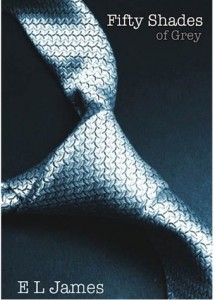
One of three covers you’ll see in every airport.

For those of you living under a rock, Fifty Shades of Grey is the first book in a trilogy by author E.L. James. It’s erotic romance in the BDSM sub-category, detailing the love affair and kinky sexual escapades of awkward, virginal Anastasia Steele and sexy billionaire Christian Grey.

The elephant in the room just got her period.

Okay. Right off the bat, let’s address the obvious: this book is about sex. It has lots and lots of sex, and that sex is very not-vanilla. I am constantly amazed by how many people are shocked by this. I guess they didn’t get a warning and/or don’t understand what these genre terms mean. Let’s break it down:

Erotic– As in graphic sex. And yes, the aim of erotica is to arouse the reader. If that makes you uncomfortable, this isn’t the book for you.

Romance– As in a relationship. A lot of romance novels weave in some sort of outside plot-line like the mysteries in Elizabeth Lowell’s books or the action plots in Celeste Bradley’s. Personally, I could do without these side-plots. Let’s be honest: most of us read romance—especially erotic romance—for the sex, not the murder mystery in the background. So why get upset when the romance is the plot? I don’t know. An unwillingness to admit to liking romances, maybe? Personal taste? Either way, Fifty Shades does away with everything but the central love story. If you need a plot outside of the relationship, this isn’t the book for you.

BDSM– As in an alternative sexual lifestyle between two consenting adults. Think: bossy dominants, handcuffs, whips, etc. There are many levels of BDSM, some of which many people actually practice in their sex lives without even realizing it (biting) and some of which most people would find highly disturbing (caning). This book floats somewhere in the middle.

Why are so many people scandalized (in a good or bad way) by these books? Probably because they had never read anything else in this genre. They say that’s how “housewives” (God, I hate that term) made this book popular: word of mouth about this new, racy thing. Truth: this is not a new genre at all.

Was I scandalized? No, although I do imagine that books 2 and 3 will get further into the BDSM side of things. Maybe I wasn’t shocked because before Fifty Shades came out, I was already very familiar with the later books in the Anita Blake series by Laurell K. Hamilton as well as the Loving on the Edge series by Roni Loren—both of which I loved.

The bottom line on the BDSM stuff? If the thought of a person willingly being tied to a bed horrifies you, this isn’t the book for you.

Let’s say it straight: these books started as Twi-hard fantasies.

Normally, I’m sort of a stickler for not bad-mouthing a book if you’ve never read it. That has always seemed incredibly hypocritical (and cowardly) to me. If it’s worth your time, read it and form a legitimate opinion. If it isn’t worth your time, why discuss it at all?

But Fifty Shades might be an exception. Pretty much every writer I’ve talked to about this book has one major, enormous, whopping problem: it started out as fan fiction for the Twilight series.

I genuinely haven’t made up my mind as to what I think about this aspect of the books. James changed the world they live in, their ages, professions, their personalities, and the plot. Is that really so different than a writer using a unique new genre to capitalize on someone elses’s success? (You know, those mid-list authors who pitch their books as “Someone Else esque.”) Is it morally wrong to lift an author’s characters and profit from it? I’m not sure. Does it feel sort of skeezy? Oh yeah. But it didn’t ruin my enjoyment of the book. That’s something you’ll have to decide for yourself.

But is the writing any good?

I think Nathan Bransford has said it best in this post. Short answer: no, not really. It’s not horrible. I’ve certainly read worse. But my critique group could have this baby polished and tightened up in a month, and the book would be better for it. I’ll break down some of the things that stood out to me.

Negatives:

Lots of internal dialogue of the gee-golly-whiz variety. Too often, too enthusiastically, and too innocently. I got sick of reading “jeez,” “Wow!” and “Oh my.”

An inability to use the appropriate words for sexual anatomy. Most importantly, female genitalia. I.e., she says “down there” a lot. If you’re going to write R-rated stuff, embrace it. Go for the four-letter words. Hell, she can’t even say “ass” or “butt”; she uses “bottom” or “buttocks.” In the middle of a sex scene. Come on.

I will say that I agree with Nina Badzin on this: if I never hear the phrase “my inner goddess” again, I will die a happy woman. James was going for a personification of Ana’s conscience and sexual appetite, and I respect that sort of risk, but it didn’t work for me.

The ending is not truly an ending. It is very clearly the first book in a series, which I don’t like. To me, that is just lazy plotting.

Positives:

It reads very fast. I could barely put it down; finished it in three work days. To me, that sort of momentum is fun to get wrapped up in, even if the book isn’t perfect. I’ve heard more than one person say they got bored during the sex scenes, which I’m baffled by. But then again, in my teenage years I devoured cheesy romance novels like they were free pizza and I was a starving college student, so maybe I have a high tolerance for extended sex scenes.

I actually found the characters pretty charming. Ana is delightfully awkward and usually pretty straight-forward in what she’s thinking. She’s innocent, but not in a “oh no, not Mr. Big Bad Wolf” sort of way… more of a “I don’t know what’s going on, but I damn sure like it” sort of way. In other words, she knows what she wants (sex with this hottie) and she goes for it. And Christian… well, he freaks a lot of readers out. Yes, he is overbearing and stalkery (which I happen to adore in a literary love interest… Heathcliff, anyone?). But he’s also sweet, clever, and intelligent. I liked him. I loved the two of them together.

The sex is sexy. You know, if you’re into that sort of thing.

There were emails back and forth throughout that I found absolutely adorable. I chuckled aloud several times. Ana and Christian had some nice wit going back and forth. They had fantastic chemistry.

Thoughts about sex as a social issue, and what writer responsibility has to do with that.

I’ve blogged about this concept before, here. I think it will be a tad easier to cover this time, since these books were never intended for teenagers. The whole “is it BDSM or sexual abuse thing” is further from the conversation, as these are both consenting adults. (And I will say, the fact that this book is inspired by Twilight does support my theory that Edward and Bella were just kinky, not in an abusive relationship. But back on track.) On the other hand, this meme:
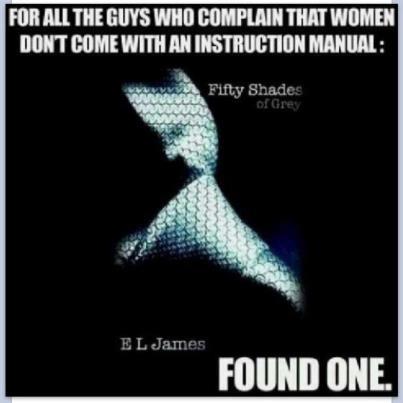
No no no no no. That is not how it works, fellas.

just goes to show that even adults have a hard time seperating real life from fiction. So yes, some of the sexual implications in this book bother me–although they’re probably not the ones you’re thinking.

The virgin myth. Entire books have been written about this. It’s too involved to really get into here. But it’s an important issue, and Fifty Shades plays right into it. Ana is a lovely 22 year old virgin who’s never even gotten to second base or had a boyfriend. Okay, sure. There are some of those out there. But what’s the point of making this subsequently sexually explosive character one of them?

Female anatomy. Okay, beyond the fact that every sexually active human should thoroughly educate themselves with both male and female anatomy (it’s not simple, folks; do your research), it seems to me that an author writing primarily about sex should DOUBLY educate herself. Which means (as I mentioned above) not being afraid to use the right terms, as well as knowing that the hymen is outside the body. And, even better, not mentioning the hymen at all. Many modern virgins don’t even have them. Why on earth is the romance genre so obsessed with hymens?

Presenting the hero of a BDSM novel as “fucked up” emotionally—and using that as the reason he’s chosen that sexual lifestyle. I’m a little conflicted on this. On one hand, I appreciate that James gave the character depth and internal conflict. On the other hand, I think the BDSM community is stigmatized enough without her justifying his choice through abuse, etc.

Orgasms. Another topic that deserves an entire post of its own. I’ll shorthand it: too many orgasms. Too easy (she’s a virgin who’s never even masturbated). And many of them with no clitoral stimulation. Isn’t it time we stop portraying sex this way? It makes women think that’s how their bodies should work and it makes men think that’s how to get things done. Just… stop it.

The hilarity factor.

Just like sparkly vampires, Fifty Shades is an easy target. Some strange writing quirks make it easy prey. Add to that: everyone loves to make fun of something that’s popular, sex makes people uncomfortable, and this sex is non-standard and people fear what they don’t know. Yeah, it’s pretty easy to mock.

A little bit of poking fun is fine. Some naughty puns. This one of “Morgan Freeman” (comedian Josh Robert Thompson) doing a “reading” is particularly funny, in my opinion, especially taken out of context. (Warning: this is from book 2 or 3 and does contain a spoiler.) Good natured teasing, I’m all for. Blind bandwagon jumping? Not so much. At some point, you have to stop and ask yourself why you’re making fun of something.

So, is it worth a read? (Final thoughts for readers.)

This is actually a complicated question. Did I enjoy the book? Yes. I gave it four out of five stars on Goodreads. (Although, to be fair, I rate different types of books independently of some cosmic scale where all books are equal. In other words, The Giver and Twilight do not get judged by the same criteria.) I will definitely check out the sequels from my public library. Would I recommend the book to a friend? Probably not. Definitely not without some discussion first. So, dear blog reader, should you read it?

Reasons yes:
It interests you.
You want to form your own opinion.
You love the BDSM erotic romance genre.
You’re curious and open-minded.
You’re a writer who wants to learn.

Reasons no:
It doesn’t interest you.
Mediocre writing is a deal-breaker for your enjoyment.
You don’t like reading kinky or graphic sex.
You passionately hate Twilight.
You’ve already made up your mind.

Final thoughts for writers.

A lot of writers waste a lot of energy hating on and slamming books like Twilight and Fifty Shades. But in my opinion, that’s useless. What do we gain from that? Bitterness? The real questions we should be asking ourselves: why were these books so successful, and what can I learn from that?

~ * ~

So, have you read Fifty Shades of Grey? What did you think? Rants and raves alike welcome below. =)
Posted in Books | Tagged , | 39 Comments

Author Image

Quite a while back, I brought up a topic on Twitter that I’ve been meaning to blog about ever since. The question I tweeted was:

And the answers, to me, were a little bit surprising. For the most part, they were a resounding no. True, I follow and am followed by mostly other writers—so perhaps we just don’t like the idea of having to meet some idealized image from readers—but I was still slightly taken aback by the ferocity of some of the opinions. Obviously, writers and authors want the right to look however the hell they look. Seems fair. And yet…

I admit that I do have certain expectations when it comes to author image. A horror author, for example, I expect to look just a little bit edgy. They don’t need to be goth (I hate that stereotype), but if they were wearing pink and smiling sweetly, it would sort of jar my preconceptions. I more commonly see black eyeliner, intense eye contact, and maybe a sneaky little smirk.


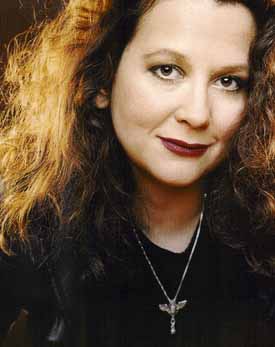
Laurell K. Hamilton looks almost exactly how I picture her main character, Anita Blake.


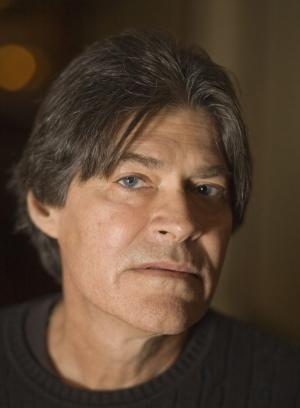
Jack Ketchum stares straight into the darkest parts of your soul (and has great hair).


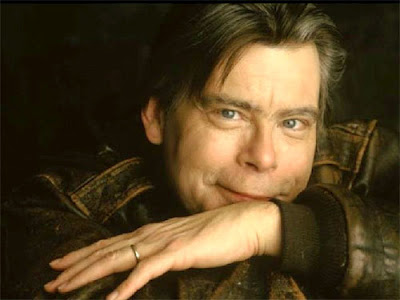
Stephen King gives you nightmares—and likes it.

Flavorwire has a very funny post about author photo clichés, if you’re interested: “Against Promotional Author Photographs.”

But truly, I think we all know them. Often, romance writers go for pretty glamour type shots, literary authors go for serious or somber shots, fantasy authors go for whimsical, sci-fi for nerdy intellectual, YA for young and accessible, etc. These are all stereotypes, mind you, but they’re ones that authors usually seem to hit.


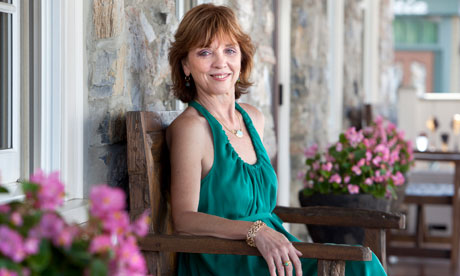
Nora Roberts looks pretty next to her flowers.


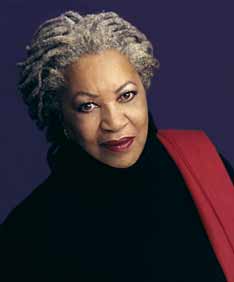
Toni Morrison isn’t going to take (or write) any crap.


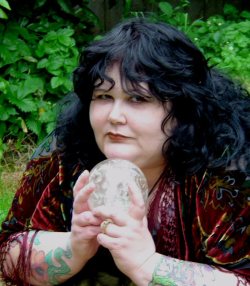
Yasmine Galenorn is holding a crystal ball?


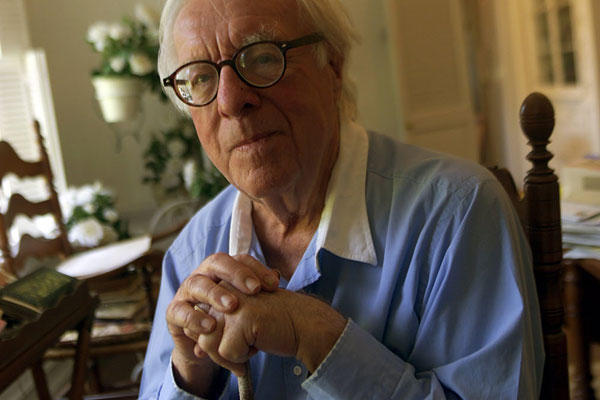
Ray Bradbury really needed those glasses, y’all.


Veronica Roth goes for modern, young, and gorgeous.

Is it a bad thing if an author surprises me in this regard? No, probably not. Although the truth is… I’m not sure. I genuinely can’t remember that ever happening. (I can think of plenty of authors whose headshots are so plain they don’t suggest any genre, but not any whose shots go against their genre.)

Which leads me to believe that most authors are hitting these preconceptions intentionally. One simple explanation? It’s a form of marketing. Perhaps readers want to buy books from someone who *looks* like they should be writing them.

What other ways could this be a marketing tactic? Is it a useful one?

How about one step further? Why haven’t more authors tapped into the extreme of this concept and gone for major sex appeal? Surely there are some erotic romance authors out there hot enough to get a spread in Esquire, Playboy, or the like. I couldn’t find any examples of this happening, although a few of my tweeps cited Poppy Z. Brite’s racy photos back in the day, and Tawni O’Dell’s near-catastrophic photoshoot in her undies before Oprah scooped her up.

And could these expectations ever be turned on their head? Could the contrast between expectation and reality ever serve to catch a reader’s attention? I know that I often get comments of surprise when people find out I’m a horror writer… but I still haven’t decided if this works for or against me. It definitely seems to prejudice other horror writers against me (at least initially: what the hell is cheerful young woman doing tweeting me?), but it also gets some people talking to me who might not otherwise think to do so if I were all gothed-out.

I don’t have the answers. I do know that there have been times when I wished I had a different headshot to use, mostly if what I’m pairing it with is something serious, sad, or frightening. My smiley side-tilt (upper right sidebar) just doesn’t seem appropriate at times like those. At the very least, someday when I get a real, professional headshot, I’d like to get a few with different facial expressions. And, yes, perhaps wearing black.

Writers: Do you have headshots? Are you satisfied with them? Did you consciously make an effort to “fit” your genre when you had them taken? And if given the right circumstances, would you ever do a sexy shoot for publicity? How far is too far?

Readers: What are your experiences with peeking at the back of your books? Do you find yourself surprised by what authors look like? Are you disappointed when there is no headshot? Can you think of an author whose headshot conflicts with their genre or general image?

I’m curious to hear what you all think! Feel free to jump into the discussion from whatever perspective you have.

Posted in Authors | 35 Comments

Digital Implications

I’m in full-force editing mode right now, and I couldn’t quite drag myself away long enough this morning to write a new blog post. So I hope you’ll forgive me for sharing one of my old poems with you instead. This one was first published in the Wichita Falls Literature and Art Review, Volume IV, in winter of 2010. It was one of the first two poems I ever had published, and my mom still loves it because it reminds her of The Syncopated Clock. For those of you curious about poetic forms, this is a modified villanelle, similar to a stretched sonnet. Enjoy.

Digital Implications

The visual tick of my
digital clock, missing the old-fashioned
sound of a tick, makes me imagine
the sound of a tock.
Neon green lights blink around
the block, since the lightning
gave our starter a shock. The visual
tick of my digital
clock harkens back to when
all awoke to the cock crowing loudly,
an alarm gone rustic—making me
imagine the sound of a tock.
The numbers will say 12:00
for an epoch… or until I reset
its buttons that click.
The visual tick of
my digital clock anxiously
urges me not to talk, but to
listen to the silent air,
so thick—making me imagine
the sound of a tock. And though
time has passed, it’s still
twelve o’clock,
in spite of the flashing:
steady, rhythmic. The
visual tick of my digital clock
makes me imagine
the sound
                        of a tock.

© Annie Neugebauer, 2010.
All rights reserved.

Posted in My Works | 14 Comments

Finding Comp Titles for Your Novel

What’s a comp title?

In spite of the fact that I’m still (or at least should be) in revising/editing mode for another month or so, lately I’ve found my mind wandering more and more in the direction of comps. For those of you not familiar, a comparable title, or ‘comp,’ is a published book that you use to help explain the intended target audience of your own WIP (work in progress).

This is something that every writer needs to do at the query-writing stage. In one of the paragraphs in your query letter to agents, you need to give one to three comp titles to send your potential agent’s mind down the right track. What readers are you reaching for? Where would your book be shelved in the store? What frame of mind should they be in when they read your first pages? Comps help to answer all of these questions.

My experiences so far.

When I first started querying back in 2007 (oh my sheesh that’s a long time) for Book 1, I had no idea what I was doing and I didn’t even really include comps. I just tagged “vampire fans” for the most part, which was a pretty lazy way out. The query was a flop – absolutely no requests for anything (although I can hardly blame that on the comps alone).

When Book 2 magicked its way to the surface, the comp titles were easy. I was modernizing classic gothic novels, so I specified the lineage with two choice books and explained the updating. That query got a couple of requests. The revised version got several more.

My original query for Book 3 didn’t even have comps. At all. It had a stellar, knock-you-on-your-ass hook/summary (thanks in large part to my super-human critique group) that led straight into my bio. I got so many requests so fast I had whiplash. I was convinced, at the time, that no comp titles was secretly the way to go. I mean, I hadn’t mentioned a single other book and look at the response!

Turns out I was wrong. My lack of comps had short-changed me, in the long run. Several of the agents who’d requested my manuscript weren’t in the right mind frame genre-wise when they read my pages, and I had no one to blame for that but myself. (Not to mention that I’d rushed to respond to the requests and undercut my revisions. Lesson well learned.) By the time I sent out a revised query to a new round of agents, I’d overcorrected, going on too much about the genre and comparables and not nearly enough about the book itself.

And now I’m within eyesight of the query process for Book 4. I’m flexing every mental muscle I have to be patient and not make the same mistakes I made before. And for some reason, out of all the things I learned about every stage of the process, I just can’t stop thinking about those damn comps. Which brings me to today’s blog post. I’d love to talk a little bit about comparable titles, both to share what I’ve learned and to get some input.

What to look for.

When choosing which books to compare your books to, there are several things to keep in mind.

Choose books that have an obvious connection to your WIP. If you’re describing a romance for your whole query and then suddenly list a fantasy novel as a comp, you’d better have a good reason. And more importantly, you’d better explain that reason. Writing style? Themes? Why the drastic difference, and what makes you think those readers could be your readers?

Choose books published within the past 10 years – the more recent, the better. Market trends matter. If you’re comparing your book to Stephen King’s The Shining, you might want to rethink. The Shining is old – really old in publishing terms – and if you can’t think of any similar books published since then, it could send warning signals to your potential agent. They want books they can sell now, not 32 years ago. (Yes, The Shining really is over 3 decades old.)

Choose successful books. Why would you want to compare yourself to a flop? Remember, you’re trying to make your book as marketable as possible.

Don’t choose super famous books. I know this might seem in conflict with the tip above, but it’s not. Choose successful books that sold well, but don’t choose massive super-bestsellers. Why? Well for one thing, it sounds arrogant. Claiming you’re the next Anne Rice makes you look a little presumptuous. But for another thing, it makes the potential agent doubt if you’ve truly done your market research. Is Harry Potter the only YA fantasy novel you’ve read? This, too, can set off warning signs, so tread cautiously with big names.

Choose 1-3 books, and make them different enough to be worth listing. Try to cover what you think of as the 3 most important aspects of your WIP (genre, style, and main character, for instance). And if you can make one of those comps a book your potential agent actually represents, all the better – but no cheating. Only do this if it’s really applicable.

A shortcut.

Yay! We’ve reached the fun part. (Maybe you’ve all already thought of this, but I just figured it out.) There is an easier way to find these comps than by chance or personal recommendations: Goodreads. Like Pandora and Amazon, Goodreads has a recommendations feature that automatically suggests new books for you based on your bookshelves. You can use this to your advantage.

Today, I created a bookshelf called “WIP-comps.” In it, I placed 6 books that I strongly believe, for one reason or another, are comparable to my WIP. (They need to be in their own shelf so you can isolate them from your other random reads.) Then I clicked on my “recommendations” tab at the top of the page and selected that shelf. Voila. 50 books that Goodreads thinks might interest me.

Now this doesn’t mean these 50 books will have anything in common with my WIP. Goodreads can’t know why I added which book. But the cool thing is that if you mouse over each recommendation without clicking, it will tell you which book it’s basing its recommendation on at the bottom, with a little note that says “Because you added…” and the cover of one of the books on that shelf. Using this and the blurbs, you can eliminate a lot of options, and then add some intriguing ones to your “to read” shelf. (And you should definitely read them. You couldn’t pay me enough money to compare my WIP to a book I haven’t actually read.)

By doing this, I’ve found several new books to read before I send my query, in hopes that one or more of them might be the most precise comparable yet. Pretty cool, huh?

My request for your recommendations.

Finally, no matter how much fun the Goodreads trick is, it’s still a computer-generated list, which makes it flawed. What I’d love to hear from you all is if you happen to have any more suggestions for me. What I’m really looking for right now is a post-apocalyptic horror novel that isn’t based around zombies or vampires. If you want brownie points, I would also love it with a wide scope, on the literary side, and starring a female protagonist. Adult is preferred. Any suggestions?

Also, I’d love to hear what your experience is with comparables. Any tips, thoughts, or discussions are welcome! Have you chosen comparables before? Did you enjoy it, or did it stress you out? How’d you decide which books and how many to list? Do you think they’re a necessary part of a good query?

Posted in The Business | Tagged | 38 Comments